Tag Archives: Week in Review

AWS Weekly Roundup: DeepSeek-R1, S3 Metadata, Elastic Beanstalk updates, and more (February 3, 2024)

Post Syndicated from Donnie Prakoso original https://aws.amazon.com/blogs/aws/aws-weekly-roundup-deepseek-r1-s3-metadata-elastic-beanstalk-updates-and-more-february-3-2024/

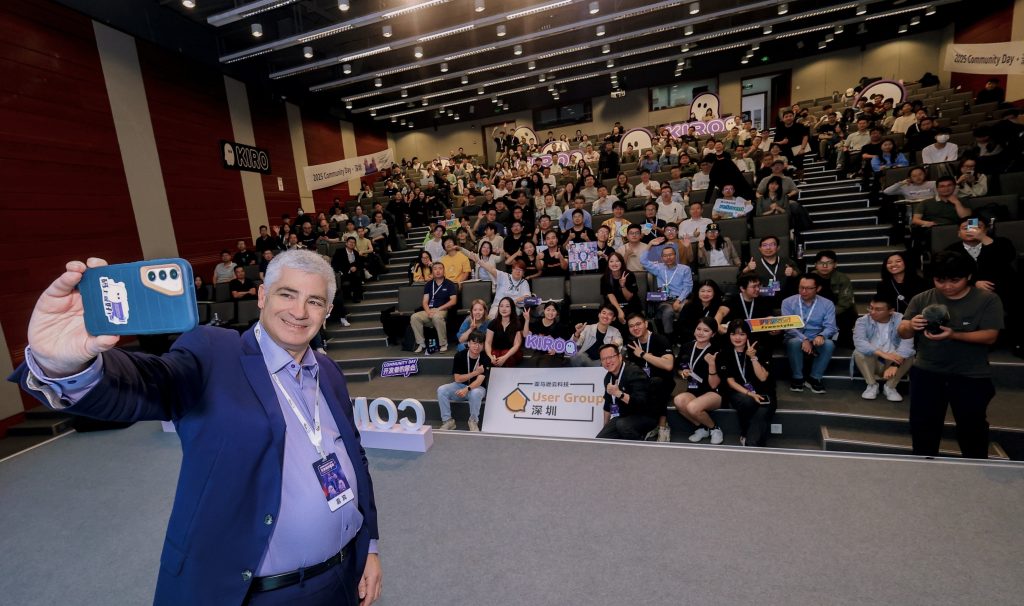
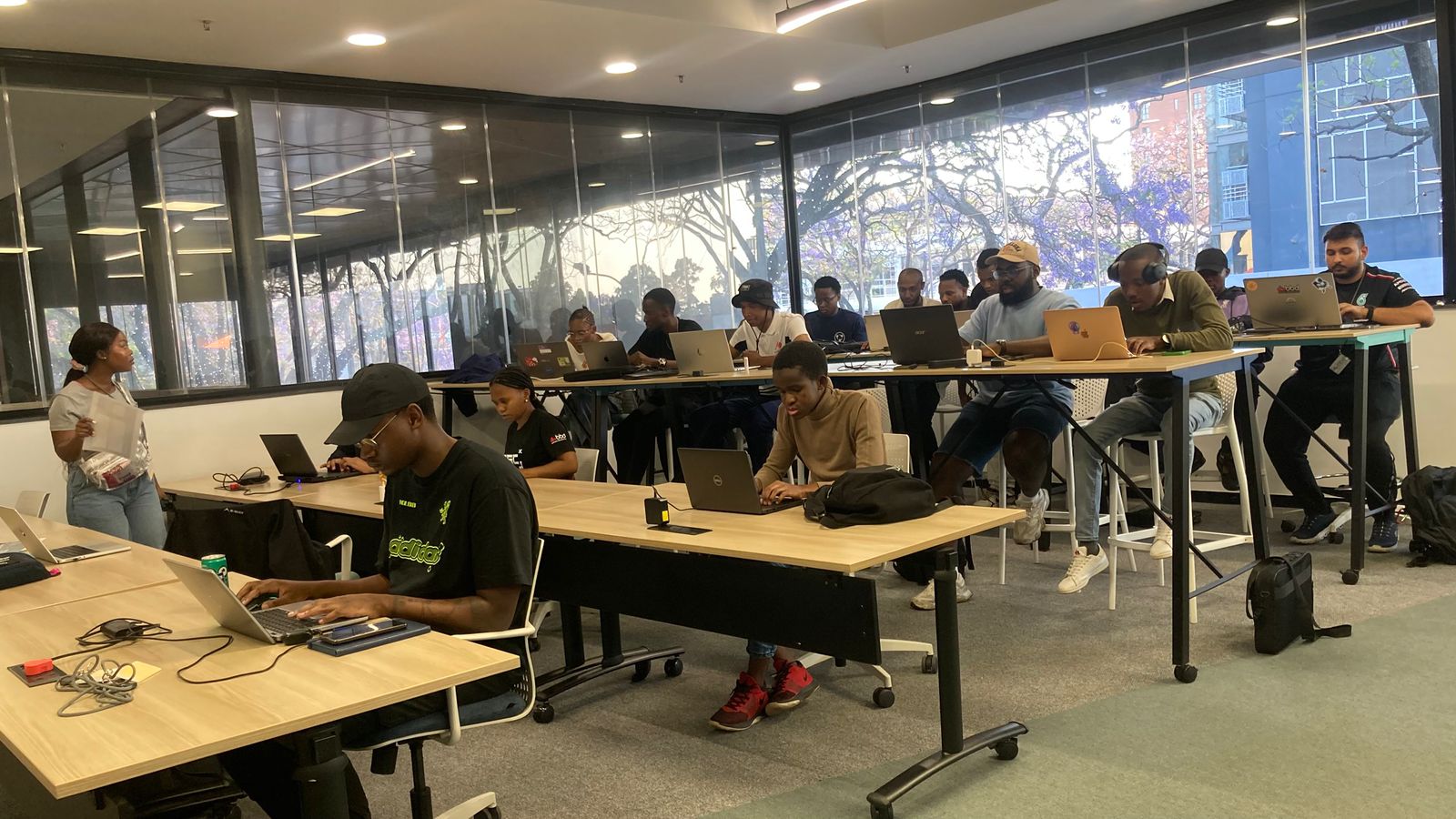
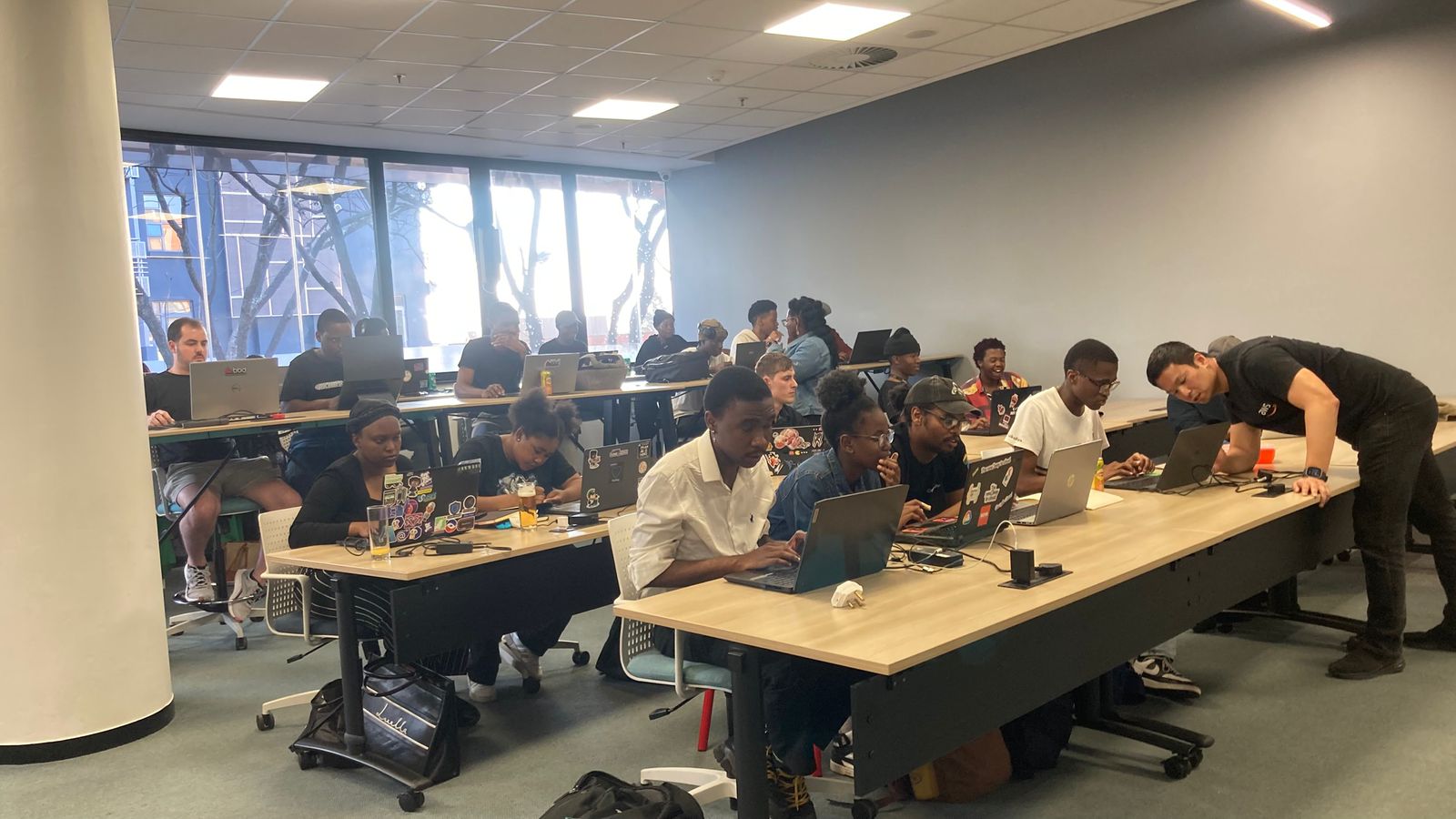
Last week, I had an amazing time attending AWS Community Day Thailand in Bangkok. This event came at an exciting time, following the recent launch of the AWS Asia Pacific (Bangkok) Region. We had over 300 attendees and featured 15 speakers from the community, including an AWS Hero and 4 AWS Community Builders who shared their technical expertise and experiences.

The highlight was definitely Jeff Barr, AWS Vice President & Chief Evangelist, delivering an inspiring keynote titled “Next-Generation Software Development”, which set the perfect tone for the day. The day kicked off with welcoming remarks from Vatsun Thirapatarapong, AWS Country Manager for Thailand, and was made even more special thanks to the tremendous support from both the AWS User Group volunteers and the AWS Thailand team.

Here’s a photo capturing the excitement from the event: 

Last week’s AWS Launches
There are 30+ launches last week and here are some launches that caught my attention:

DeepSeek-R1 models now available on AWS — Channy wrote on how you can now deploy DeepSeek-R1 models in Amazon Bedrock and Amazon SageMaker AI. This helps you to build and scale generative AI applications with minimal infrastructure investment.

Amazon S3 Tables increases table limit to 10,000 per bucket — S3 Tables now supports creating up to 10,000 tables in each table bucket, allowing you to scale up to 100,000 tables across 10 buckets within an AWS Region per account.

Amazon S3 Metadata now generally available — S3 Metadata provides automated and easily queried metadata that updates in near real-time, simplifying business analytics and real-time inference applications. It supports both system-defined and custom metadata, including integration with AWS analytics services.

AWS Amplify adds TypeScript Data client support for Lambda functions — Developers can now use the Amplify Data client within AWS Lambda functions, enabling consistent type-safe data operations across frontend and backend applications.

AWS Elastic Beanstalk adds Python 3.13, .NET 9, and PHP 8.4 support on Amazon Linux 2023 — AWS Elastic Beanstalk brings the latest language features and improvements to application deployments while benefiting from Amazon Linux 2023 enhanced security and performance features.

From community.aws
Here’s my top 5 personal favorites posts from community.aws:

Upcoming AWS and community events
Check your calendars and sign up for upcoming AWS and community events:

  • AWS Korea re:Invent reCap Online, February 2-4 — A virtual event recapping key announcements and innovations from re:Invent 2023 for the Korean audience.
  • AWS Community Days – Join community-led conferences that feature technical discussions, workshops, and hands-on labs. Upcoming AWS Community Day is in Ahmedabad (February 8).
  • AWS Public Sector Day London, February 27 — Join public sector leaders and innovators to explore how AWS is enabling digital transformation in government, education, and healthcare.
  • AWS Innovate GenAI + Data Edition — A free online conference focusing on generative AI and data innovations. Available in multiple Regions: APJC and EMEA (March 6), North America (March 13), Greater China Region (March 14), and Latin America (April 8).

Browse more upcoming AWS led in-person and virtual developer-focused events.

AWS Community re:Invent re:Caps

Lastly, if you want to learn about top announcements and innovations from AWS re:Invent, the AWS Community shares a summary from a community perspective of these announcements so you can get up to speed. Download the AWS Community re:Invent re:Caps deck

That’s all for this week. Check back next Monday for another Weekly Roundup!

Donnie

This post is part of our Weekly Roundup series. Check back each week for a quick roundup of interesting news and announcements from AWS!

AWS Weekly Roundup: New Asia Pacific Region, DynamoDB updates, Amazon Q developer, and more (January 13, 2025)

Post Syndicated from Betty Zheng (郑予彬) original https://aws.amazon.com/blogs/aws/aws-weekly-roundup-new-asia-pacific-region-dynamodb-updates-amazon-q-developer-and-more-january-13-2025/

As we move into the second week of 2025, China is celebrating Laba Festival (腊八节), a traditional holiday, which marks the beginning of Chinese New Year preparations. On this day, Chinese people prepare Laba congee, a special porridge combining various grains, dried fruits, and nuts. This

nutritious mixture symbolizes harmony, prosperity, and good fortune — with each ingredient representing the diversity and abundance of life. This traditional practice dates back to when Buddha achieved enlightenment after consuming rice porridge, making it a symbol of both material and spiritual nourishment. The festival, occurring on the eighth day of the twelfth lunar month, marks the countdown to Spring Festival, China’s most significant traditional holiday celebrating family reunion and renewal.

As our global tech community grows, such cultural celebrations remind us of the importance of inclusive innovation and shared progress.

Last week’s launches

Let’s take a look at what Amazon Web Services (AWS) launched in this week.

New AWS Asia Pacific (Thailand) Region– AWS has expanded its global infrastructure with the launch of the new Asia Pacific (Thailand) AWS Region, featuring three Availability Zones. With this addition, customers in Thailand and throughout Southeast Asia can serve customers with reduced latency while maintaining data residency within Thailand. The newly launched Region supports the complete range of AWS services and strengthens our presence in the rapidly growing ASEAN market.

New AWS Direct Connect location in Bangkok – Following the launch of our Thailand Region, we’ve established a new AWS Direct Connect location in Bangkok and expanded our existing infrastructure. This addition provides customers in Thailand with improved connectivity options and reduced network latency when accessing AWS services.

Database and analytics

Configurable point-in-time recovery periods for Amazon DynamoDBAmazon DynamoDB now enables customizable point-in-time recovery (PITR) periods, which means customers can specify recovery durations ranging from 1 to 35 days on a per-table basis. This enhancement enables organizations to meet precise compliance requirements while maximizing cost-efficiency. The feature is now available across all AWS Regions, including AWS GovCloud (US West) and China Regions. This flexibility in data recovery periods empowers customers to align their backup policies precisely with their business requirements and regulatory obligations.

Amazon MSK Connect APIs with AWS PrivateLinkAmazon Managed Streaming for Apache Kafka Connect (Amazon MSK Connect) APIs now support AWS PrivateLink, giving customers access to MSK Connect APIs through private endpoints within their virtual private cloud (VPC). This enhancement provides increased security and reduced data exposure by keeping traffic within the AWS network.

Generative AI and machine learning

Amazon Q Developer in SageMaker Code EditorAmazon Q Developer is now integrated into the Amazon SageMaker Code Editor integrated development environment (IDE), enhancing the developer’s experience with AI-powered code assistance. Intelligent code suggestions, documentation assistance, and contextual recommendations are now directly available within the SageMaker development environment.

Management and governance

AWS Systems Manager Automation in AWS ChatbotAWS Chatbot now offers 20 additional AWS Systems Manager Automation runbook recommendations, expanding its capabilities for automated operations management. These new recommendations help customers streamline their operational tasks and implement best practices more efficiently through chat-based interactions.

AWS Transit Gateway cost analysis enhancement – We’ve introduced new capabilities for analyzing Transit Gateway data processing charges using cost allocation tags. This feature provides improved visibility and control over networking costs, enabling organizations to track and optimize AWS Transit Gateway usage efficiently. The enhanced cost analysis tools deliver detailed insights into network traffic patterns and associated costs.

Other AWS news and highlights

2024’s most popular DevOps blog posts – The retrospective blog post “The most visited DevOps and Developer Productivity blog posts in 2024” has reached the top one position on this week’s AWS most popular articles chart. This compilation presents the most influential DevOps content from 2024, offering insights into trending topics and best practices. The collection examines key developments in continuous integration and continuous development (CI/CD), infrastructure as code (IaC), and automation practices.

New security course for generative AIAWS Skill Builder has released a new course focusing on securing generative AI applications on AWS. This comprehensive training teaches professionals to implement security best practices for artificial intelligence and machine learning (AI/ML) workloads, addressing data protection, model security, and compliance requirements. The course meets the growing demand for specialized security knowledge in the rapidly evolving field of generative AI.

Amazon Connect Contact Lens free trials – We’re introducing free trials for first-time users of Amazon Connect Contact Lens conversational analytics and performance evaluations. New customers can process up to 100,000 voice minutes monthly at no cost for 2 months, and first-time performance evaluation users receive a 30-day free trial starting with their first evaluation. With this initiative, customers can experience Contact Lens capabilities in their environment without additional costs. The free trials are available across all AWS Regions where Contact Lens is supported.

For a full list of AWS announcements, be sure to keep an eye on the What’s New with AWS page.

Whether you’re a developer, architect, business leader, or you’re starting your cloud journey – and regardless of what 2024 brought your way – 2025 presents new opportunities for everyone.

This post is part of our Weekly Roundup series. Check back each week for a quick roundup of interesting news and announcements from AWS!

Betty

AWS Weekly Roundup: Amazon EC2 F2 instances, Amazon Bedrock Guardrails price reduction, Amazon SES update, and more (December 16, 2024)

Post Syndicated from Danilo Poccia original https://aws.amazon.com/blogs/aws/aws-weekly-roundup-amazon-ec2-f2-instances-amazon-bedrock-guardrails-price-reduction-amazon-ses-update-and-more-december-16-2024/

The week after AWS re:Invent builds on the excitement and energy of the event and is a good time to learn more and understand how the recent announcements can help you solve your challenges. As usual, we have you covered with our top announcements of AWS re:Invent 2024 post.

You can now watch keynotes and sessions on the AWS Event YouTube channel. This year Andy Jassy, now President and CEO at Amazon, returned to re:Invent and shared some thoughts in these videos.

Drawing on experiences Amazon has had building distributed systems at massive scale, Werner Vogels, VP and CTO at Amazon, shared critical lessons and strategies he has learned for managing complex systems in his keynote.

Last week’s launches
Here are the launches that got my attention.

Amazon Elastic Compute Cloud (Amazon EC2) – A new generation of FPGA-powered instances (F2) is now available. In contrast to a purpose-built chip designed with a single function in mind and then hard-wired to implement it, a field programmable gate array (FPGA) can be programmed in the field, after it has been plugged in to a socket on a PC board. We’re also introducing Amazon EC2 High Memory U7i instances with 6TiB and 8TiB of memory. U7i instances are ideal to run large in-memory databases such as SAP HANA, Oracle, and SQL Server. Graviton-based 8th generation instances now support bandwidth configurations for Amazon VPC and Amazon EBS.

Amazon Bedrock Guardrails – We are reducing pricing by up to 85% to help you implement safeguards for your generative AI applications. Also, we’re adding multilingual capabilities with support for Spanish and French languages.

Amazon Simple Email Services (SES) – Now offers Global Endpoints for multi-region sending resilience and announces the availability of Deterministic Easy DKIM (DEED), a new form of global identity which simplifies the use of DomainKeys Identified Mail (DKIM) management.

AWS CloudFormation – An enhanced version of the AWS Secrets Manager transform introducing automatic AWS Lambda upgrades.

Amazon Lex – Launches new multilingual streaming speech recognition models that enhance recognition accuracy through two specialized groupings: a European-based model (for Portuguese, Catalan, French, Italian, German, and Spanish) and a Asia Pacific-based model (for Chinese, Korean, and Japanese).

Amazon Connect – Now supports push notifications for mobile chat on iOS and Android devices. In this way, you can be proactively notified as soon as there is a new message from an agent or chatbot, even when not actively chatting. You can now also configure holidays and other variances to your contact center hours of operation.

AWS Security Hub – Now supports automated security checks aligned to the Payment Card Industry Data Security Standard (PCI DSS) v4.0.1, a compliance framework that provides a set of rules and guidelines for safely handling credit and debit card information.

AWS Resource ExplorerSupports 59 new resource types including Amazon Elastic Kubernetes Service (Amazon EKS), Amazon Kendra, AWS Identity and Access Management (IAM) Access Analyzer, and Amazon SageMaker.

Amazon SageMaker AI – Inference optimized Amazon EC2 G6e instances (powered by NVIDIA L40S Tensor Core GPUs) and P5e (powered by NVIDIA H200 Tensor Core GPUs) are now available on Amazon SageMaker.

Amazon Redshift – Now supports automatically and incrementally refreshable materialized views on tables in a zero-ETL integration. Previously, in this case, you had to run a full refresh.

AWS Toolkit for Visual Studio Code – Now includes Amazon CloudWatch Logs Live Tail, an interactive log streaming and analytics capability that provides real-time visibility into your logs and makes it easier to develop and troubleshoot applications.

Other AWS news
Here are some additional projects, blog posts, and news items that you might find interesting:

Build a managed transactional data lake with Amazon S3 Tables – Just introduced at re:Invent 2024, Amazon S3 Tables is the first cloud object store with built-in Apache Iceberg support and the easiest way to store tabular data at scale. This post on the AWS Storage Blog provides an overview of S3 Tables and an example of how to build a transactional data lake with S3 Tables using Apache Spark on Amazon EMR.

Introducing Cross-Region Connectivity for AWS PrivateLink – More information on this recent launch that can be used to share and access Amazon Virtual Private Cloud (Amazon VPC) endpoint services across different AWS Regions.

Marc Brooker, VP/Distinguished Engineer at AWS, shared on his personal blog a few posts about what Amazon Aurora DSQL is, how it works, and how to make the best use of it:

That’s all for this week. Check back next Monday for another Weekly Roundup!

Danilo

This post is part of our Weekly Roundup series. Check back each week for a quick roundup of interesting news and announcements from AWS!

AWS Weekly Roundup: AWS BuilderCards at re:Invent 2024, AWS Community Day, Amazon Bedrock, vector databases, and more (Nov 18, 2024)

Post Syndicated from Elizabeth Fuentes original https://aws.amazon.com/blogs/aws/aws-weekly-roundup-aws-buildercards-at-reinvent-2024-aws-community-day-amazon-bedrock-vector-databases-and-more-nov-18-2024/

This week, we wrapped up the final 2024 Latin America Amazon Web Services (AWS) Community Days of the year in Brazil, with multiple parallel events taking place. In Goiânia, we had Marcelo Palladino, senior developer advocate, and Marcelo Paiva, AWS Community Builder, as keynote speakers. Florianópolis feature Ana Cunha, senior developer advocate, and in Santiago de Chile, I had the honor to share the stage with Rossana Suarez, AWS Container Hero, as keynote speakers. These events, organized by communities for communities, provide opportunities to network, learn something new, and immerse yourself in the community. In a community, everyone grows together, and no one is left behind.

AWS Lambda celebrates its 10th anniversary, the service that introduced me to AWS and remains my favorite. Born from customer needs, it revolutionized cloud computing by allowing code execution without server management. Since its inception, documented in this LinkedIn post by Dr. Werner Vogels, Chief Technology Officer at Amazon.com, through the original PR/FAQ document, the service has grown significantly, introducing features such as 1ms billing precision and support for 10GB memory. Thank you AWS Lambda, here’s to many more anniversaries.

Amazon invests $110 million to support AI research at universities using Trainium chips. The initiative provides computing resources using AWS Trainium chips, enabling researchers to develop new AI architectures and machine learning innovations that will be open-sourced for broader advancement. Check out the Linkedin post by Matt Garman, CEO at AWS.

Last week’s launches
AWS BuilderCards second edition at re:Invent 2024Jeff Barr announced the launch of the second edition of AWS BuilderCards at re:Invent 2024. It includes improvements to the design and game mechanics, plus a new add-on pack on generative AI. Over 15,000 sets have been distributed at previous events, with excellent user feedback. They’ll be available for online purchase after re:Invent.

Amazon EventBridge announces up to 94% improvement in end-to-end latency for Event BusesAmazon EventBridge has improved end-to-end latency for Event Buses by up to 94%, reducing average latency from 2235.23ms (measured in January 2023) to 129.33ms (measured in August 2024 at P99). This enhancement enables faster processing for time-sensitive applications such as fraud detection, industrial automation, and gaming across all AWS Regions where Amazon EventBridge is available, including the AWS GovCloud (US) Regions, at no additional cost to you.

Introducing resource control policies (RCPs), a new type of authorization policy in AWS OrganizationsResource control policies (RCPs), a new authorization policy in AWS Organizations. RCPs allow centralized control over maximum permissions granted to resources, complementing service control policies (SCPs) that control permissions for principals. RCPs can restrict external access to resources like Amazon Simple Storage Service (Amazon S3) buckets, enforcing a data perimeter across the organization.

Replicate changes from databases to Apache Iceberg tables using Amazon Data Firehose (in preview) – A new preview capability in Amazon Data Firehose that captures and replicates database changes to Apache Iceberg tables on Amazon S3. This feature supports PostgreSQL and MySQL databases, providing a simple solution to stream database updates without impacting performance. It automatically handles data partitioning and schema evolution, eliminating the need for complex ETL processes.

Amazon S3 now supports up to 1 million buckets per AWS account– Amazon S3 has increased its default bucket quota from 100 to 10,000 per AWS account. Customers can now request increases up to 1 million buckets. The first 2,000 buckets are free, with a small monthly fee applying thereafter for additional buckets.

Amazon Keyspaces (for Apache Cassandra) reduces prices by up to 75%Amazon Keyspaces (for Apache Cassandra) announces significant price reductions of up to 75%. The service reduces on-demand mode pricing by up to 56% for single-region and 65% for multi-region usage. Time-to-live (TTL) delete prices are also reduced by 75%.

Centrally managing root access for customers using AWS OrganizationsAWS Identity and Access Management (IAM) launches a new capability for centrally managing root access in AWS Organizations. This feature allows security teams to remove long-term root credentials from member accounts and use temporary, task-scoped root sessions for specific actions. The solution enhances security by eliminating permanent root credentials while maintaining the ability to perform necessary privileged operations.

Amazon DynamoDB reduces prices for on-demand throughput and global tablesAmazon DynamoDB announces significant price reductions, cutting on-demand mode throughput costs by 50% and global tables by up to 67%. Multi-region replicated writes now match single-region pricing. These changes make on-demand mode the recommended choice for most DynamoDB workloads.

Amazon Q Developer plugins for Datadog and Wiz now generally availableAmazon Q Developer now offers plugins for Datadog and Wiz services, allowing users to access these partners features directly through the AWS Console. Users can query information using natural language commands like @datadog or @wiz to get real-time updates and security insights.

Other AWS blog posts
Here are some additional projects and blog posts that you might find interesting:

Introducing Stable Diffusion 3.5 Large in Amazon SageMaker JumpStart – This powerful 8.1 billion parameter model enables high-quality, photorealistic image generation from text prompts. Customers can seamlessly deploy and use the model in Amazon SageMaker JumpStart, benefiting from Amazon SageMaker security and machine learning operations (MLOps) capabilities.

Transcribe, translate, and summarize live streams in your browser with AWS AI and generative AI services – This blog post explains how we developed a Chrome extension that uses AI services to enhance live streaming experiences. The extension use Amazon Transcribe, Amazon Translate, and Amazon Bedrock to provide real-time transcription, translation, and summarization of live streams directly in the browser. It supports over 50 languages for transcription and 75 for translation, making content globally accessible.

Simplify automotive damage processing with Amazon Bedrock and vector databases –This blog post presents a solution combining Amazon Bedrock and vector databases to streamline automotive damage assessment. The system uses AI to analyze vehicle damage images, provide cost estimates, and match with similar cases from existing datasets. It use Anthropic’s Claude 3 and Amazon Titan Multimodal Embeddings, for efficient, accurate processing.

Revolutionize trip planning with Amazon Bedrock and Amazon Location Service – Amazon Bedrock and Amazon OpenSearch Service vector databases combine to automate automotive damage assessment, using AI to analyze images and match them with historical data for accurate repair estimates.

Upcoming AWS events
Check your calendars and sign up for upcoming AWS events:

AWS Community Days – Join community-led conferences featuring technical discussions, workshops, and hands-on labs driven by expert AWS users and industry leaders from around the world. Upcoming AWS Community Days are scheduled for November 23 in Indonesia, and on December 14 in Kochi, India.

AWS re:Invent 2024 – Join us in Las Vegas to learn all things AWS. Our annual conference is the best—and fastest—way to grow your skills. If you can’t join us in person, you can attend virtually by registering at
Watch re:Invent online.

Browse all upcoming AWS led in-person and virtual events and developer-focused events.

Create your AWS Builder ID and reserve your alias. Builder ID is a universal login credential that gives users access to AWS tools and resources, including over 600 free training courses, community features, and developer tools such as Amazon Q Developer beyond the AWS Management Console.

That’s all for this week. Check back next Monday for another Weekly Roundup!

Thanks to Odina Jacobs for the AWS Community Chile photo.

Eli

This post is part of our Weekly Roundup series. Check back each week for a quick roundup of interesting news and announcements from AWS!

AWS Weekly Roundup: 20 years of AWS News Blog, Express brokers for Amazon MSK, Windows Server 2025 images on EC2, and more (Nov 11, 2024)

Post Syndicated from Channy Yun (윤석찬) original https://aws.amazon.com/blogs/aws/aws-weekly-roundup-20-years-of-aws-news-blog-express-brokers-for-amazon-msk-windows-server-2025-images-on-ec2-and-more-nov-11-2024/

Happy 20th Anniversary of the AWS News Blog! 🎉🥳🎊 On November 9, 2004, Jeff Barr published his first blog post. At the time, he started a personal blog site using TypePad. He wanted to speak to his readers with his personal voice, not the company or team.

On April 29, 2014, we created a new AWS blog site and migrated all posts to that page. There are currently over 4,300 posts on the AWS News Blog, with Jeff contributing over 3,200 of them.

Since December 2016, the AWS News Blog has added new writers, but we are still following Jeff’s leadership principals for AWS News Bloggers in accordance with Day One. What’s unique about the AWS News Blog is that the blog writers get to use the features of the product team in advance, following the Customer Obsession leadership principle, and focus on walk-throughs of how customers can quickly use them to save time, with the Frugality principle.

I am very grateful for Jeff’s fundamental and pivotal role over the past 20 years, and I look forward to the next 20 years!

Last week’s launches
Here are some launches that got my attention:

New Express brokers for Amazon MSK – Express brokers are a new broker type for Amazon MSK Provisioned designed to deliver up to three times more throughput per broker, scale up to 20 times faster, and reduce recovery time by 90 percent as compared to standard Apache Kafka brokers. Express brokers come preconfigured with Kafka best practices by default, support all Kafka APIs, and provide the same low-latency performance, so you can continue using existing client applications without any changes.

New Amazon Kinesis Client Library 3.0 – You can now reduce compute costs to process streaming data by up to 33 percent with Kinesis Client Library (KCL) 3.0, compared to previous KCL versions. KCL 3.0 introduces an enhanced load balancing algorithm that continuously monitors resource utilization of the stream processing workers and automatically redistributes the load from overutilized workers to other underutilized workers. To learn more, read the AWS Big Data Blog post.

Microsoft Windows Server 2025 images on Amazon EC2 – We now support Microsoft Windows Server 2025 with License Included (LI) Amazon Machine Images (AMIs), providing customers with an easy and flexible way to launch the latest version of Windows Server. By running Windows Server 2025 on Amazon EC2, customers can take advantage of the security, performance, and reliability of AWS with the latest Windows Server features. To learn more about running Windows Server 2025 on Amazon EC2, visit Windows Workloads on AWS.

Anthropic’s Claude 3.5 Haiku model in Amazon Bedrock – Claude 3.5 Haiku is the next generation of Anthropic’s fastest model, combining rapid response times with improved reasoning capabilities, making it ideal for tasks that require both speed and intelligence. Claude 3.5 Haiku improves across every skill set and surpasses even Claude 3 Opus, the largest model in Anthropic’s previous generation, on many intelligence benchmarks—including coding. To learn more, read the AWS News Blog post.

Amazon Bedrock Prompt Management GA – You can simplify the creation, testing, versioning, and sharing of prompts in Amazon Bedrock Prompt Management. At general availability, we added new features that provide enhanced options for configuring your prompts and enabling seamless integration for invoking them in your generative AI applications, such as structured prompts and Converse and InvokeModel API integration. To learn more, read the AWS Machine Learning blog post.

Six new synthetic generative voices for Amazon Polly – The generative engine is Amazon Polly’s most advanced text-to-speech (TTS) model leveraging the generative AI technology. We added six new synthetic female-sounding generative voices: Ayanda (South African English), Léa (French), Lucia (European Spanish), Lupe (American Spanish), Mía (Mexican Spanish), and Vicki (German). This extends thirteen voices and nine locales to provide you with more options of highly expressive and engaging voices.

Amazon OpenSearch Service Extended Support – We announce the end of Standard Support and Extended Support timelines for legacy Elasticsearch versions and OpenSearch Versions. Standard Support ends on Nov 7, 2025, for legacy Elasticsearch versions up to 6.7, Elasticsearch versions 7.1 through 7.8, OpenSearch versions from 1.0 through 1.2, and OpenSearch versions 2.3 through 2.9. With Extended Support, for an incremental flat fee over regular instance pricing, you continue to get critical security updates beyond the end of Standard Support. To learn more, read the AWS Big Data Blog post.

For a full list of AWS announcements, be sure to keep an eye on the What’s New at AWS page.

Other AWS news
Here are some additional news items that you might find interesting:

CEO’s visiting at AWS data center – Matt Garman, CEO of AWS, had a great time visiting one of our AWS data centers recently, and was able to get a look at the continuous innovation delivered by the team. Of course, it’s no surprise that Amazon’s senior executives visit fulfillment centers, contact centers, and data centers, to do real work for customers. AWS data centers are designed for customers in every aspect, for maximum resilience, performance, and energy efficiency.

AWS supports small businesses, creates jobs, sets up sustainability initiatives, and develops educational programs near AWS data centers. Get the latest updates – AWS in your community: Here’s what’s happening near data centers across the US on About Amazon News.

Amazon Q Business at Amazon – I introduced an Amazon story to use Code transformation in Amazon Q Developer to migrate more than old 30,000 Java applications to Java 17 version. It saved over 4,500 developer years of effort compared to previous manual jobs and saved the company $260 million in annual by moving to the latest Java version.

Here is another dogfooding story of Amazon Q Business at Amazon. Amazon built an internal chatbot with Amazon Q Business and it has resolved over 1 million internal Amazon developer questions, reducing time spent churning on manual technical investigations by more than 450,000 hours.

Our team onboarded Amazon Q Business with millions of internal documents and integrated Q Business into the tools our team use every day. Now, instead of waiting hours for responses to complex technical questions on Q&A boards or Slack channels, developers can get answers in seconds.

TOURCast at PGA TOUR – If you enjoy golf, this news will be of interest to you. The PGA TOUR debuted TOURCast in Japan at the 2024 ZOZO Championship to capture and disseminate better statistical data and bring fans closer to the game based on new scoring system called ShotLink, powered by CDW. This marks the first time the PGA TOUR has been able to bring this technology to Asia, leveraging the flexibility and scalability of AWS to overcome unique challenges.


PGA TOUR volunteer setting up GPS equipment on the fairway at ZOZO championship that will input specific shot data and feed back to Shotlink Select Plus. [IMAGE: PGA TOUR]

They’ve completely rebuilt their scoring system over the past two years on a new cloud stack. With AWS cloud, whether data comes from high-tech radar systems, cameras, or manual input, the system processes it all seamlessly.

Upcoming AWS events
Check your calendars and sign up for these AWS events:

AWS GenAI LoftsAWS GenAI Lofts are about more than just the tech, they bring together startups, developers, investors, and industry experts. Whether you’re looking to gain deep insights, or get your questions answered by generative AI pros, our GenAI Lofts have you covered, and provide everything you need to start building your next innovation. Join events in São Paulo (through November 20), and Paris (through November 25).

AWS Community Days – Join community-led conferences that feature technical discussions, workshops, and hands-on labs led by expert AWS users and industry leaders from around the world: Jakarta, Indonesia (November 23), Kochi, India (December 14).

AWS re:Invent – You can still register for the annual learning event, taking place December 2–6 in Las Vegas. Surprisingly Andy Jassy, CEO of Amazon said he will come back and participate in AWS re:Invent this year. He said “As always, the priority is to make this a learning event so customers can take nuggets back and change their own customer experiences and businesses. We’ll also have a bunch of goodies for you that we’ll announce and that we think folks will like.” Let’s meet there!

You can browse all upcoming in-person and virtual events.

That’s all for this week. Check back next Monday for another Weekly Roundup!

Channy

This post is part of our Weekly Roundup series. Check back each week for a quick roundup of interesting news and announcements from AWS!

AWS Weekly Roundup: Agentic workflows, Amazon Transcribe, AWS Lambda insights, and more (October 21, 2024)

Post Syndicated from Antje Barth original https://aws.amazon.com/blogs/aws/aws-weekly-roundup-agentic-workflows-amazon-transcribe-aws-lambda-insights-and-more-october-21-2024/

Agentic workflows are quickly becoming a cornerstone of AI innovation, enabling intelligent systems to autonomously handle and refine complex tasks in a way that mirrors human problem-solving. Last week, we launched Serverless Agentic Workflows with Amazon Bedrock, a new short course developed in collaboration with Dr. Andrew Ng and DeepLearning.AI.

Serverless Agentic Workflows with Amazon Bedrock

This hands-on course, taught by my colleague Mike Chambers, teaches how to build serverless agents that can handle complex tasks without the hassle of managing infrastructure. You will learn everything you need to know about integrating tools, automating workflows, and deploying responsible agents with built-in guardrails on Amazon Web Services (AWS) with Amazon Bedrock. The hands-on labs provided with the course let you apply your knowledge directly in an AWS environment, hosted by AWS Partner Vocareum. Find more information and enroll for free on the DeepLearning.AI course page.

Now, let’s turn our attention to other exciting news in the AWS universe from last week.

Last week’s launches
Here are some launches that got my attention:

Amazon Transcribe now supports streaming transcription in 30 additional languagesAmazon Transcribe has expanded its support to include 30 additional languages, bringing the total number of supported languages to 54. This enhancement helps you reach a broader global audience and improves accessibility across various industries, including contact centers, broadcasting, and e-learning. The expanded language support allows for more efficient content moderation, improved agent productivity, and automatic subtitling for live events and meetings.

AWS Lambda console now surfaces key function insights and supports real-time log analytics – The AWS Lambda console now features a built-in Amazon CloudWatch Metrics Insights dashboard and supports CloudWatch Logs Live Tail, providing instant visibility into critical function metrics and real-time log streaming. You can now identify and troubleshoot errors or performance issues for your Lambda functions without leaving the console, as well as view and analyze logs in real time as they become available. You can reduce context switching and accelerate the development and troubleshooting processes for serverless applications. Check out the launch post for more details.

Amazon Bedrock Model Evaluation now supports evaluating custom model import models – You can now evaluate custom models you’ve imported to Amazon Bedrock using the model evaluation feature. This helps you to complete the full cycle of selecting, customizing, and evaluating models before deploying them. To evaluate an imported model, select the custom model from the list of models to evaluate in the model selector tool when creating an evaluation job.

Amazon Q in AWS Supply Chain – You can now use Amazon Q, an interactive AI assistant, to analyze your supply chain data in AWS Supply Chain and get insights to operate your supply chain more efficiently. Amazon Q can answer your supply chain questions by diving into your data. This reduces the time spent searching for information and streamlines finding answers to improve your supply chain operations.

For a full list of AWS announcements, be sure to keep an eye on the What’s New at AWS page.

Other AWS news
Here are some additional news items and posts that you might find interesting:

New Amazon OpenSearch Service YouTube channel – The channel offers bite-sized tutorials, curated content, and organized playlists on topics such as log analytics, semantic search, vector databases, and operational best practices. You can also provide feedback to influence future channel content and the OpenSearch Service roadmap. Check out the launch post for more details and subscribe to the Amazon OpenSearch Service YouTube channel.

Deploying Generative AI Applications with NVIDIA NIM Microservices on Amazon Elastic Kubernetes Service (Amazon EKS) – This post shows you how to use Amazon EKS to orchestrate the deployment of pods containing NVIDIA NIM microservices, to enable quick-to-setup and optimized large-scale large language model (LLM) inference on Amazon EC2 G5 instances. It also demonstrates how to scale (both pod and cluster) by monitoring for custom metrics through Prometheus, and how you can load balance using an Application Load Balancer.

Instant Well-Architected CDK Resources with Solutions Constructs Factories – You can now create well-architected AWS resources such as Amazon Simple Storage Service (Amazon S3) buckets and AWS Step Functions state machines with a single function call using the new AWS Solutions Constructs Factories. These factories handle all the best practices configuration for you while still allowing customization. Try using a Constructs factory the next time you need to deploy one of the supported resources.

Upcoming AWS events
Check your calendars and sign up for these AWS events:

AWS GenAI LoftsAWS GenAI LoftsAWS GenAI Lofts are about more than just the tech, they bring together startups, developers, investors, and industry experts. Whether you’re looking to gain deep insights, or get your questions answered by generative AI pros, our GenAI Lofts have you covered and provide everything you need to start building your next innovation. Join events in London (through October 25), Seoul (October 30–November 6), São Paulo (through November 20), and Paris (through November 25).

AWS Community DaysAWS Community Days – Join community-led conferences that feature technical discussions, workshops, and hands-on labs led by expert AWS users and industry leaders from around the world: Malta (November 8), Chile (November 9), and Kochi, India (December 14).

AWS re:Invent 2024AWS re:InventRegistration is now open for the annual tech extravaganza, taking place December 2–6 in Las Vegas. At re:Invent 2024, you’ll get a front row seat to hear real stories from customers and AWS leaders about navigating pressing topics, such as generative AI. Learn about new product launches, watch demos, and get behind-the-scenes insights during five headline-making keynotes.

You can browse all upcoming in-person and virtual events.

That’s all for this week. Check back next Monday for another Weekly Roundup!

— Antje

This post is part of our Weekly Roundup series. Check back each week for a quick roundup of interesting news and announcements from AWS!

AWS Weekly Roundup: Amazon EC2 X8g Instances, Amazon Q generative SQL for Amazon Redshift, AWS SDK for Swift, and more (Sep 23, 2024)

Post Syndicated from Abhishek Gupta original https://aws.amazon.com/blogs/aws/aws-weekly-roundup-amazon-ec2-x8g-instances-amazon-q-generative-sql-for-amazon-redshift-aws-sdk-for-swift-and-more-sep-23-2024/

AWS Community Days have been in full swing around the world. I am going to put the spotlight on AWS Community Day Argentina where Jeff Barr delivered the keynote, talks and shared his nuggets of wisdom with the community, including a fun story of how he once followed Bill Gates to a McDonald’s!

I encourage you to read about his experience.

Last week’s launches
Here are the launches that got my attention, starting off with the GA releases.

Amazon EC2 X8g Instances are now generally availableX8g instances are powered by AWS Graviton4 processors and deliver up to 60% better performance than AWS Graviton2-based Amazon EC2 X2gd instances. These instances offer larger sizes with up to 3x more vCPU (up to 48xlarge) and memory (up to 3TiB) than Graviton2-based X2gd instances.

Amazon Q generative SQL for Amazon Redshift is now generally available – Amazon Q generative SQL in Amazon Redshift Query Editor is an out-of-the-box web-based SQL editor for Amazon Redshift. It uses generative AI to analyze user intent, query patterns, and schema metadata to identify common SQL query patterns directly within Amazon Redshift, accelerating the query authoring process for users and reducing the time required to derive actionable data insights.

AWS SDK for Swift is now generally availableAWS SDK for Swift provides a modern, user-friendly, and native Swift interface for accessing Amazon Web Services from Apple platforms, AWS Lambda, and Linux-based Swift on Server applications. Now that it’s GA, customers can use AWS SDK for Swift for production workloads. Learn more in the AWS SDK for Swift Developer Guide.

AWS Amplify now supports long-running tasks with asynchronous server-side function calls – Developers can use AWS Amplify to invoke Lambda function asynchronously for operations like generative AI model inferences, batch processing jobs, or message queuing without blocking the GraphQL API response. This improves responsiveness and scalability, especially for scenarios where immediate responses are not required or where long-running tasks need to be offloaded.

Amazon Keyspaces (for Apache Cassandra) now supports add-column for multi-Region tables – With this launch, you can modify the schema of your existing multi-Region tables in Amazon Keyspaces (for Apache Cassandra) to add new columns. You only have to modify the schema in one of its replica Regions and Keyspaces will replicate the new schema to the other Regions where the table exists.

Amazon Corretto 23 is now generally availableAmazon Corretto is a no-cost, multi-platform, production-ready distribution of OpenJDK. Corretto 23 is an OpenJDK 23 Feature Release that includes an updated Vector API, expanded pattern matching and switch expression, and more. It will be supported through April, 2025.

Use OR1 instances for existing Amazon OpenSearch Service domains – With OpenSearch 2.15, you can leverage OR1 instances for your existing Amazon OpenSearch Service domains by simply updating your existing domain configuration, and choosing OR1 instances for data nodes. This will seamlessly move domains running OpenSearch 2.15 to OR1 instances using a blue/green deployment.

Amazon S3 Express One Zone now supports AWS KMS with customer managed keys – By default, S3 Express One Zone encrypts all objects with server-side encryption using S3 managed keys (SSE-S3). With S3 Express One Zone support for customer managed keys, you have more options to encrypt and manage the security of your data. S3 Bucket Keys are always enabled when you use SSE-KMS with S3 Express One Zone, at no additional cost.

Use AWS Chatbot to interact with Amazon Bedrock agents from Microsoft Teams and Slack – Before, customers had to develop custom chat applications in Microsoft Teams or Slack and integrate it with Amazon Bedrock agents. Now they can invoke their Amazon Bedrock agents from chat channels by connecting the agent alias with an AWS Chatbot channel configuration.

AWS CodeBuild support for managed GitLab runners – Customers can configure their AWS CodeBuild projects to receive GitLab CI/CD job events and run them on ephemeral hosts. This feature allows GitLab jobs to integrate natively with AWS, providing security and convenience through features such as IAM, AWS Secrets Manager, AWS CloudTrail, and Amazon VPC.

We launched existing services in additional Regions:

Other AWS news
Here are some additional projects, blog posts, and news items that you might find interesting:

Secure Cross-Cluster Communication in EKS – It demonstrates how you can use Amazon VPC Lattice and Pod Identity to secure cross-EKS-cluster application communication, along with an example that you can use as a reference to adapt to your own microservices applications.

Improve RAG performance using Cohere Rerank – This post focuses on improving search efficiency and accuracy in RAG systems using Cohere Rerank.

AWS open source news and updates – My colleague Ricardo Sueiras writes about open source projects, tools, and events from the AWS Community; check out Ricardo’s page for the latest updates.

Upcoming AWS events
Check your calendars and sign up for upcoming AWS events:

AWS Community Days – Join community-led conferences that feature technical discussions, workshops, and hands-on labs led by expert AWS users and industry leaders from around the world. Upcoming AWS Community Days are in Italy (Sep. 27), Taiwan (Sep. 28), Saudi Arabia (Sep. 28)), Netherlands (Oct. 3), and Romania (Oct. 5).

Browse all upcoming AWS led in-person and virtual events and developer-focused events.

That’s all for this week. Check back next Monday for another Weekly Roundup!

— Abhishek

This post is part of our Weekly Roundup series. Check back each week for a quick roundup of interesting news and announcements from AWS!

AWS Weekly Roundup: Oracle Database@AWS, Amazon RDS, AWS PrivateLink, Amazon MSK, Amazon EventBridge, Amazon SageMaker and more

Post Syndicated from Matheus Guimaraes original https://aws.amazon.com/blogs/aws/aws-weekly-roundup-oracle-databaseaws-amazon-rds-aws-privatelink-amazon-msk-amazon-eventbridge-amazon-sagemaker-and-more/

Hello, everyone!

It’s been an interesting week full of AWS news as usual, but also full of vibrant faces filling up the rooms in a variety of events happening this month.

Let’s start by covering some of the releases that have caught my attention this week.

My Top 3 AWS news of the week

Amazon RDS for MySQL zero-ETL integrations is now generally available and it comes with exciting new features. You are now able to configure zero-ETL integrations in your AWS CloudFormation templates, and you also now have the ability to set up multiple integrations from a source Amazon RDS for MySQL database with up to five Amazon Redshift warehouses. Lastly, you can now also apply data filters which determine which database and tables get automatically replicated. Read this blog post where I review aspects of this release and show you how to get started with data filtering if you want to know more. Incidentally, this release pairs well with another release this week: Amazon Redshift now allows you to alter the sort keys of tables replicated via zero-ETL integrations.

Oracle Database@AWS has been announced as part of a strategic partnership between Amazon Web Services (AWS) and Oracle. This offering allows customers to access Oracle Autonomous Database and Oracle Exadata Database Service directly within AWS simplifying cloud migration for enterprise workloads. Key features include zero-ETL integration between Oracle and AWS services for real-time data analysis, enhanced security, and optimized performance for hybrid cloud environments. This collaboration addresses the growing demand for multi-cloud flexibility and efficiency. It will be available in preview later in the year with broader availability in 2025 as it expands to new Regions.

Amazon OpenSearch Service now supports version 2.15, featuring improvements in search performance, query optimization, and AI-powered application capabilities. Key updates include radial search for vector space queries, optimizations for neural sparse and hybrid search, and the ability to enable vector and hybrid search on existing indexes. Additionally, it also introduces new features like a toxicity detection guardrail and an ML inference processor for enriching ingest pipelines. Read this guide to see how you can upgrade your Amazon OpenSearch Service domain.

So simple yet so good
These releases are simple in nature, but have a big impact.

AWS Resource Access Manager (RAM) now supports AWS PrivateLink – With this release, you can now securely share resources across AWS accounts with private connectivity, without exposing traffic to the public internet. This integration allows for more secure and streamlined access to shared services via VPC endpoints, improving network security and simplifying resource sharing across organizations.

AWS Network Firewall now supports AWS PrivateLink – another security quick-win, you can now securely access and manage Network Firewall resources without exposing traffic to the public internet.

AWS IAM Identity Center now enables users to customize their experience – You can set the language and visual mode preferences, including dark mode for improved readability and reduced eye strain. This update supports 12 different languages and enables users to adjust their settings for a more personalized experience when accessing AWS resources through the portal​.

Others
Amazon EventBridge Pipes now supports customer managed KMS keysAmazon EventBridge Pipes now supports customer-managed keys for server-side encryption. This update allows customers to use their own AWS Key Management Service (KMS) keys to encrypt data when transferring between sources and targets, offering more control and security over sensitive event data. The feature enhances security for point-to-point integrations without the need for custom integration code. See instructions on how to configure this in the updated documentation. 

AWS Glue Data Catalog now supports enhanced storage optimization for Apache Iceberg tables – This includes automatic removal of unnecessary data files, orphan file management, and snapshot retention. These optimizations help reduce storage costs and improve query performance by continuously monitoring and compacting tables, making it easier to manage large-scale datasets stored in Amazon S3. See this Big Data blog post for a deep dive into this new feature.

Amazon MSK Replicator now supports the replication of Kafka topics across clusters while preserving identical topic namesThis simplifies cross-cluster replication processes allowing users to replicate data across regions without needing to reconfigure client applications. This reduces setup complexity and enhances support for more seamless failovers in multi-cluster streaming architectures​. See this Amazon MSK Replicator developer guide to learn more about it.

Amazon SageMaker introduces sticky session routing for inferenceThis allows requests from the same client to be directed to the same model instance for the duration of a session improving consistency and reducing latency, particularly in real-time inference scenarios like chatbots or recommendation systems, where session-based interactions are crucial​. Read about how to configure it in this documentation guide.

Events
The AWS GenAI Lofts continue to pop up around the world! This week, developers in San Francisco had the opportunity to attend two very exciting events at the AWS Gen AI Loft in San Francisco including the “Generative AI on AWS” meetup last Tuesday, featuring discussions about extended reality, future AI tools, and more. Then things got playful on Thursday with the demonstration of an Amazon Bedrock-powered MineCraft bot and AI video game battles! If you’re around San Francisco before October 19th make sure to check out the schedule to see the list of events that you can join.

AWS GenAI Loft San Francisco talk

Make sure to check out the AWS GenAI Loft in Sao Paulo, Brazil, which opened recently, and the AWS GenAI Loft in London, which opens September 30th. You can already start registering for events before they fill up including one called “The future of development” that offers a whole day of targeted learning for developers to help them accelerate their skills.

Our AWS communities have also been very busy throwing incredible events! I was privileged to be a speaker at AWS Community Day Belfast where I got to finally meet all of the organizers of this amazing thriving community in Northern Ireland. If you haven’t been to a community day, I really recommend you check them out! You are sure to leave energized by the dedication and passion from communities leaders like Matt Coulter, Kristi Perreault, Matthew Wilson, Chloe McAteer, and their community members – not to mention the smiles all around. 🙂

AWS Community Belfast organizers and codingmatheus

Certifications
If you’ve been postponing taking an AWS certification exam, now is the perfect time! Register free for the AWS Certified: Associate Challenge before December 12, 2024 and get a 50% discount voucher to take any of the following exams: AWS Certified Solutions Architect – Associate, AWS Certified Developer – Associate, AWS Certified SysOps Administrator – Associate, or AWS Certified Data Engineer – Associate. My colleague Jenna Seybold has posted a collection of study material for each exam; check it out if you’re interested.

Also, don’t forget that the brand new AWS Certified AI Practitioner exam is now available. It is in beta stage, but you can already take it. If you pass it before February 15, 2025, you get an Early Adopter badge to add to your collection.

Conclusion
I hope you enjoyed the news this week!

Keep learning!

AWS Weekly Roundup: Amazon DynamoDB, AWS AppSync, Storage Browser for Amazon S3, and more (September 9, 2024)

Post Syndicated from Danilo Poccia original https://aws.amazon.com/blogs/aws/aws-weekly-roundup-amazon-dynamodb-aws-appsync-storage-browser-for-amazon-s3-and-more-september-9-2024/

Last week, the latest AWS Heroes arrived! AWS Heroes are amazing technical experts who generously share their insights, best practices, and innovative solutions to help others.

The AWS GenAI Lofts are in full swing with San Francisco and São Paulo open now, and London, Paris, and Seoul coming in the next couple of months. Here’s an insider view from a workshop in San Francisco last week.

AWS GenAI Loft San Francisco workshop

Last week’s launches
Here are the launches that got my attention.

Storage Browser for Amazon S3 (alpha release) – An open source Amplify UI React component that you can add to your web applications to provide your end users with a simple interface for data stored in S3. The component uses the new ListCallerAccessGrants API to list all S3 buckets, prefixes, and objects they can access, as defined by their S3 Access Grants.

AWS Network Load Balancer – Now supports a configurable TCP idle timeout. For more information, see this Networking & Content Devliery Blog post.

AWS Gateway Load Balancer – Also supports a configurable TCP idle timeout. More info is available in this blog post.

Amazon ECS – Now supports AWS Graviton-based Spot compute with AWS Fargate. This allows to run fault-tolerant Arm-based applications with up to 70% lower costs compared to on-demand.

Zone Groups for Availability Zones in AWS Regions – We are working on extending the Zone Group construct to Availability Zones (AZs) with a consistent naming format across all AWS Regions.

Amazon Managed Service for Apache Flink – Now supports Apache Flink 1.20. You can upgrade to benefit from bug fixes, performance improvements, and new functionality added by the Flink community.

AWS Glue – Now provides job queuing. If quotas or limits are insufficient to start a Glue job, AWS Glue will now automatically queue the job and wait for limits to free up.

Amazon DynamoDB – Now supports Attribute-Based Access Control (ABAC) for tables and indexes (limited preview). ABAC is an authorization strategy that defines access permissions based on tags attached to users, roles, and AWS resources. Read more in this Database Blog post.

Amazon BedrockStability AI’s top text-to-image models (Stable Image Ultra, Stable Diffusion 3 Large, and Stable Image Core) are now available to generate high-quality visuals with speed and precision.

Amazon Bedrock Agents – Now supports Anthropic Claude 3.5 Sonnet, including Anthropic recommended tool use for function calling which can improve developer and end user experience.

Amazon Sagemaker Studio – You can now use Amazon EMR Serverless directly from your Studio Notebooks to interactively query, explore and visualize data, and run Apache Spark jobs.

Amazon SageMakerIntroducing sagemaker-core, a new Python SDK that provides an object-oriented interface for interacting with SageMaker resources such as TrainingJob, Model, and Endpoint resource classes.

AWS AppSync – Improves monitoring by including DEBUG and INFO logging levels for its GraphQL APIs. You now have more granular control over log verbosity to make it easier to troubleshoot your APIs while optimizing readability and costs.

Amazon WorkSpaces Pools – You can now bring your Windows 10 or 11 licenses and provide a consistent desktop experience when switching between on-premise and virtual desktops.

Amazon SES – A new enhanced onboarding experience to help discover and activate key SES features, including recommendations for optimal setup and the option to enable the Virtual Deliverability Manager to enhance email deliverability.

Amazon Redshift – Now the Amazon Redshift Data API support session reuse to retain the context of a session from one query execution to another, reducing connection setup latency on repeated queries to the same data warehouse.

For a full list of AWS announcements, be sure to keep an eye on the What’s New at AWS page.

Other AWS news
Here are some additional projects, blog posts, and news items that you might find interesting:

Amazon Q Developer Code Challenge – At the 2024 AWS Summit in Sydney, we put two teams (one using Amazon Q Developer, one not) in a battle of coding prowess, starting with basic math and string manipulation, up to including complex algorithms and intricate ciphers. Here are the results.

Amazon Q Developer Code Challenge graph

AWS named as a Leader in the first Gartner Magic Quadrant for AI Code Assistants – It’s great to see how new technologies make the whole software development lifecycle easier and increase developer productivity.

Build powerful RAG pipelines with LlamaIndex and Amazon Bedrock – A deep dive tutorial that covers simple and advanced use cases.

Evaluating prompts at scale with Prompt Management and Prompt Flows for Amazon Bedrock – To implement an automated prompt evaluation system to streamline prompt development and improve the overall quality of AI-generated content.

Amazon Redshift data ingestion options – An overview of the available ingestion methods and how they work for different use cases.

Amazon Redshift data ingestion options

Upcoming AWS events
Check your calendars and sign up for upcoming AWS events:

AWS Summits – Join free online and in-person events that bring the cloud computing community together to connect, collaborate, and learn about AWS. AWS Summits for this year are coming to an end. There are two more left that you can still register: Toronto (September 11), and Ottawa (October 9).

AWS Community Days – Join community-led conferences that feature technical discussions, workshops, and hands-on labs driven by expert AWS users and industry leaders from around the world. Upcoming AWS Community Days are in the SF Bay Area (September 13), where our own Antje Barth is a keynote speaker, Argentina (September 14), Armenia (September 14), and DACH (in Munich on September 17).

AWS GenAI Lofts – Collaborative spaces and immersive experiences that showcase AWS’s cloud and AI expertise, while providing startups and developers with hands-on access to AI products and services, exclusive sessions with industry leaders, and valuable networking opportunities with investors and peers. Find a GenAI Loft location near you and don’t forget to register.

Browse all upcoming AWS-led in-person and virtual events here.

That’s all for this week. Check back next Monday for another Weekly Roundup!

Danilo

This post is part of our Weekly Roundup series. Check back each week for a quick roundup of interesting news and announcements from AWS!

AWS Weekly Roundup: AWS Parallel Computing Service, Amazon EC2 status checks, and more (September 2, 2024)

Post Syndicated from Esra Kayabali original https://aws.amazon.com/blogs/aws/aws-weekly-roundup-aws-parallel-computing-service-amazon-ec2-status-checks-and-more-september-2-2024/

With the arrival of September, AWS re:Invent 2024 is now 3 months away and I am very excited for the new upcoming services and announcements at the conference. I remember attending re:Invent 2019, just before the COVID-19 pandemic. It was the biggest in-person re:Invent with 60,000+ attendees and it was my second one. It was amazing to be in that atmosphere! Registration is now open for AWS re:Invent 2024. Come join us in Las Vegas for five exciting days of keynotes, breakout sessions, chalk talks, interactive learning opportunities, and career-changing connections!

Now let’s look at the last week’s new announcements.

Last week’s launches
Here are the launches that got my attention.

Announcing AWS Parallel Computing Service – AWS Parallel Computing Service (AWS PCS) is a new managed service that lets you run and scale high performance computing (HPC) workloads on AWS. You can build scientific and engineering models and run simulations using a fully managed Slurm scheduler with built-in technical support and a rich set of customization options. Tailor your HPC environment to your specific needs and integrate it with your preferred software stack. Build complete HPC clusters that integrates compute, storage, networking, and visualization resources, and seamlessly scale from zero to thousands of instances. To learn more, visit AWS Parallel Computing Service and read Channy’s blog post.

Amazon EC2 status checks now support reachability health of attached EBS volumes – You can now use Amazon EC2 status checks to directly monitor if the Amazon EBS volumes attached to your instances are reachable and able to complete I/O operations. With this new status check, you can quickly detect attachment issues or volume impairments that may impact the performance of your applications running on Amazon EC2 instances. You can further integrate these status checks within Auto Scaling groups to monitor the health of EC2 instances and replace impacted instances to ensure high availability and reliability of your applications. Attached EBS status checks can be used along with the instance status and system status checks to monitor the health of your instances. To learn more, refer to the Status checks for Amazon EC2 instances documentation.

Amazon QuickSight now supports sharing views of embedded dashboards – You can now share views of embedded dashboards in Amazon QuickSight. This feature allows you to enable more collaborative capabilities in your application with embedded QuickSight dashboards. Additionally, you can enable personalization capabilities such as bookmarks for anonymous users. You can share a unique link that displays only your changes while staying within the application, and use dashboard or console embedding to generate a shareable link to your application page with QuickSight’s reference encapsulated using the QuickSight Embedding SDK. QuickSight Readers can then send this shareable link to their peers. When their peer accesses the shared link, they are taken to the page on the application that contains the embedded QuickSight dashboard. For more information, refer to Embedded view documentation.

Amazon Q Business launches IAM federation for user identity authenticationAmazon Q Business is a fully managed service that deploys a generative AI business expert for your enterprise data. You can use the Amazon Q Business IAM federation feature to connect your applications directly to your identity provider to source user identity and user attributes for these applications. Previously, you had to sync your user identity information from your identity provider into AWS IAM Identity Center, and then connect your Amazon Q Business applications to IAM Identity Center for user authentication. At launch, Amazon Q Business IAM federation will support the OpenID Connect (OIDC) and SAML2.0 protocols for identity provider connectivity. To learn more, visit Amazon Q Business documentation.

Amazon Bedrock now supports cross-Region inferenceAmazon Bedrock announces support for cross-Region inference, an optional feature that enables you to seamlessly manage traffic bursts by utilizing compute across different AWS Regions. If you are using on-demand mode, you’ll be able to get higher throughput limits (up to 2x your allocated in-Region quotas) and enhanced resilience during periods of peak demand by using cross-Region inference. By opting in, you no longer have to spend time and effort predicting demand fluctuations. Instead, cross-Region inference dynamically routes traffic across multiple Regions, ensuring optimal availability for each request and smoother performance during high-usage periods. You can control where your inference data flows by selecting from a pre-defined set of Regions, helping you comply with applicable data residency requirements and sovereignty laws. Find the list at Supported Regions and models for cross-Region inference. To get started, refer to the Amazon Bedrock documentation or this Machine Learning blog.

For a full list of AWS announcements, be sure to keep an eye on the What’s New at AWS page.

We launched existing services and instance types in additional Regions:

Other AWS events
AWS GenAI Lofts are collaborative spaces and immersive experiences that showcase AWS’s cloud and AI expertise, while providing startups and developers with hands-on access to AI products and services, exclusive sessions with industry leaders, and valuable networking opportunities with investors and peers. Find a GenAI Loft location near you and don’t forget to register.

Gen AI loft workshop

credit: Antje Barth

Upcoming AWS events
Check your calendar and sign up for upcoming AWS events:

AWS Summits are free online and in-person events that bring the cloud computing community together to connect, collaborate, and learn about AWS. AWS Summits for this year are coming to an end. There are 3 more left that you can still register: Jakarta (September 5), Toronto (September 11), and Ottawa (October 9).

AWS Community Days feature technical discussions, workshops, and hands-on labs led by expert AWS users and industry leaders from around the world. While AWS Summits 2024 are almost over, AWS Community Days are in full swing. Upcoming AWS Community Days are in Belfast (September 6), SF Bay Area (September 13), where our own Antje Barth is a keynote speaker, Argentina (September 14), and Armenia (September 14).

Browse all upcoming AWS led in-person and virtual events here.

That’s all for this week. Check back next Monday for another Weekly Roundup!

— Esra

This post is part of our Weekly Roundup series. Check back each week for a quick roundup of interesting news and announcements from AWS!

AWS Weekly Roundup: S3 Conditional writes, AWS Lambda, JAWS Pankration, and more (August 26, 2024)

Post Syndicated from Veliswa Boya original https://aws.amazon.com/blogs/aws/aws-weekly-roundup-s3-conditional-writes-aws-lambda-jaws-pankration-and-more-august-26-2024/

The AWS User Group Japan (JAWS-UG) hosted JAWS PANKRATION 2024 themed ‘No Border’. This is a 24-hour online event where AWS Heroes, AWS Community Builders, AWS User Group leaders, and others from around the world discuss topics ranging from cultural discussions to technical talks. One of the speakers at this event, Kevin Tuei, an AWS Community Builder based in Kenya, highlighted the importance of building in public and sharing your knowledge with others, a very fitting talk for this kind of event.

Last week’s launches
Here are some launches that got my attention during the previous week.

Amazon S3 now supports conditional writes – We’ve added support for conditional writes in Amazon S3 which check for existence of an object before creating it. With this feature, you can now simplify how distributed applications with multiple clients concurrently update data in parallel across shared datasets. Each client can conditionally write objects, making sure that it does not overwrite any objects already written by another client.

AWS Lambda introduces recursive loop detection APIs – With the recursive loop detection APIs you can now set recursive loop detection configuration on individual AWS Lambda functions. This allows you to turn off recursive loop detection on functions that intentionally use recursive patterns, avoiding disruption of these workloads. Using these APIs, you can avoid disruption to any intentionally recursive workflows as Lambda expands support of recursive loop detection to other AWS services. Configure recursive loop detection for Lambda functions through the Lambda Console, the AWS command line interface (CLI), or Infrastructure as Code tools like AWS CloudFormation, AWS Serverless Application Model (AWS SAM), or AWS Cloud Development Kit (CDK). This new configuration option is supported in AWS SAM CLI version 1.123.0 and CDK v2.153.0.

General availability of Amazon Bedrock batch inference API – You can now use Amazon Bedrock to process prompts in batch to get responses for model evaluation, experimentation, and offline processing. Using the batch API makes it more efficient to run inference with foundation models (FMs). It also allows you to aggregate responses and analyze them in batches. To get started, visit Run batch inference.

Other AWS news
Launched in July 2024, AWS GenAI Lofts is a global tour designed to foster innovation and community in the evolving landscape of generative artificial intelligence (AI) technology. The lofts bring collaborative pop-up spaces to key AI hotspots around the world, offering developers, startups, and AI enthusiasts a platform to learn, build, and connect. The events are ongoing. Find a location near you and be sure to attend soon.

Upcoming AWS events
AWS Summits – These are free online and in-person events that bring the cloud computing community together to connect, collaborate, and learn about AWS. Whether you’re in the Americas, Asia Pacific & Japan, or EMEA region, learn more about future AWS Summit events happening in your area. On a personal note, I look forward to being one of the keynote speakers at the AWS Summit Johannesburg happening this Thursday. Registrations are still open and I look forward to seeing you there if you’ll be attending.

AWS Community Days – Join an AWS Community Day event just like the one I mentioned at the beginning of this post to participate in technical discussions, workshops, and hands-on labs led by expert AWS users and industry leaders from your area. If you’re in New York, there’s an event happening in your area this week.

You can browse all upcoming in-person and virtual events here.

That’s all for this week. Check back next Monday for another Weekly Roundup!

– Veliswa

AWS Weekly Roundup: G6e instances, Karpenter, Amazon Prime Day metrics, AWS Certifications update and more (August 19, 2024)

Post Syndicated from Prasad Rao original https://aws.amazon.com/blogs/aws/aws-weekly-roundup-g6e-instances-karpenter-amazon-prime-day-metrics-aws-certifications-update-and-more-august-19-2024/

You know what I find more exciting than the Amazon Prime Day sale? Finding out how Amazon Web Services (AWS) makes it all happen. Every year, I wait eagerly for Jeff Barr’s annual post to read the chart-topping metrics. The scale never ceases to amaze me.

This year, Channy Yun and Jeff Barr bring us behind the scenes of how AWS powered Prime Day 2024 for record-breaking sales. I will let you read the post for full details, but one metric that blows my mind every year is that of Amazon Aurora. On Prime Day, 6,311 Amazon Aurora database instances processed more than 376 billion transactions, stored 2,978 terabytes of data, and transferred 913 terabytes of data.

Amazon Box with checkbox showing a record breaking prime day event powered by AWS

Other news I’m excited to share is that registration is open for two new AWS Certification exams. You can now register for the beta version of the AWS Certified AI Practitioner and AWS Certified Machine Learning Engineer – Associate. These certifications are for everyone—from line-of-business professionals to experienced machine learning (ML) engineers—and will help individuals prepare for in-demand artificial intelligence and machine learning (AI/ML) careers. You can prepare for your exam by following a four-step exam prep plan for AWS Certified AI Practitioner and AWS Certified Machine Learning Engineer – Associate.

Last week’s launches
Here are some launches that got my attention:

General availability of Amazon Elastic Compute Cloud (Amazon EC2) EC2 G6e instances – Powered by NVIDIA L40S Tensor Core GPUs, G6e instances can be used for a wide range of ML and spatial computing use cases. You can use G6e instances to deploy large language models (LLMs) with up to 13B parameters and diffusion models for generating images, video, and audio.

Release of Karpenter 1.0 – Karpenter is a flexible, efficient, and high-performance Kubernetes compute management solution. You can use Karpenter with Amazon Elastic Kubernetes Service (Amazon EKS) or any conformant Kubernetes cluster. To learn more, visit the Karpenter 1.0 launch post.

Drag-and-drop UI for Amazon SageMaker Pipelines – With this launch, you can now quickly create, execute, and monitor an end-to-end AI/ML workflow to train, fine-tune, evaluate, and deploy models without writing code. You can drag and drop various steps of the workflow and connect them together in the UI to compose an AI/ML workflow.

Split, move and modify Amazon EC2 On-Demand Capacity Reservations – With the new capabilities for managing Amazon EC2 On-Demand Capacity Reservations, you can split your Capacity Reservations, move capacity between Capacity Reservations, and modify your Capacity Reservation’s instance eligibility attribute. To learn more about these features, refer to Split off available capacity from an existing Capacity Reservation.

Document-level sync reports in Amazon Q Business – This new feature of Amazon Q Business provides you with a comprehensive document-level report including granular indexing status, metadata, and access control list (ACL) details for every document processed during a data source sync job. You have the visibility of the status of the documents Amazon Q Business attempted to crawl and index as well as the ability to troubleshoot why certain documents were not returned with the expected answers.

Landing zone version selection in AWS Control Tower – Starting with landing zone version 3.1 and above, you can update or reset in-place your landing zone on the current version, or upgrade to a version of your choice. To learn more, visit Select a landing zone version in the AWS Control Tower user guide.

Launch of AWS Support Official channel on AWS re:Post – You now have access to curated content for operating at scale on AWS, authored by AWS Support and AWS Managed Services (AMS) experts. In this new channel, you can find technical solutions for complex problems, operational best practices, and insights into AWS Support and AMS offerings. To learn more, visit the AWS Support Official channel on re:Post.

For a full list of AWS announcements, be sure to keep an eye on the What’s New at AWS page.

Regional expansion of AWS Services
Here are some of the expansions of AWS services into new AWS Regions that happened this week:

Amazon VPC Lattice is now available in 7 additional RegionsAmazon VPC Lattice is now available in US West (N. California), Africa (Cape Town), Europe (Milan), Europe (Paris), Asia Pacific (Mumbai), Asia Pacific (Seoul), and South America (São Paulo). With this launch, Amazon VPC Lattice is now generally available in 18 AWS Regions.

Amazon Q in QuickSight is now available in 5 additional Regions Amazon Q in QuickSight is now generally available in Asia Pacific (Mumbai), Canada (Central), Europe (Ireland), Europe (London), and South America (São Paulo), in addition to the existing US East (N. Virginia), US West (Oregon), and Europe (Frankfurt) Regions.

AWS Wickr is now available in the Europe (Zurich) RegionAWS Wickr adds Europe (Zurich) to the US East (N. Virginia), Asia Pacific (Singapore), Asia Pacific (Sydney), Asia Pacific (Tokyo), Canada (Central), Europe (London), Europe (Frankfurt), and Europe (Stockholm) Regions that it’s available in.

You can browse the full list of AWS Services available by Region.

Upcoming AWS events
Check your calendars and sign up for these AWS events:

AWS re:Invent 2024 – Dive into the first-round session catalog. Explore all the different learning opportunities at AWS re:Invent this year and start building your agenda today. You’ll find sessions for all interests and learning styles.

AWS Summits – The 2024 AWS Summit season is starting to wrap up! Join free online and in-person events that bring the cloud computing community together to connect, collaborate, and learn about AWS. Register in your nearest city: Jakarta (September 5), and Toronto (September 11).

AWS Community Days – Join community-led conferences that feature technical discussions, workshops, and hands-on labs led by expert AWS users and industry leaders from around the world: Colombia (August 24), New York (August 28), Belfast (September 6), and Bay Area (September 13).

AWS GenAI Lofts – Meet AWS AI experts and attend talks, workshops, fireside chats, and Q&As with industry leaders. All lofts are free and are carefully curated to offer something for everyone to help you accelerate your journey with AI. There are lofts scheduled in San Francisco (August 14–September 27), São Paulo (September 2–November 20), London (September 30–October 25), Paris (October 8–November 25), and Seoul (November).

You can browse all upcoming in-person and virtual events.

That’s all for this week. Check back next Monday for another Weekly Roundup!

Prasad

This post is part of our Weekly Roundup series. Check back each week for a quick roundup of interesting news and announcements from AWS!

AWS Weekly Roundup: Mithra, Amazon Titan Image Generator v2, AWS GenAI Lofts, and more (August 12, 2024)

Post Syndicated from Channy Yun (윤석찬) original https://aws.amazon.com/blogs/aws/aws-weekly-roundup-mithra-amazon-titan-image-generator-v2-aws-genai-lofts-and-more-august-12-2024/

When Dr. Swami Sivasubramanian, VP of AI and Data, was an intern at Amazon in 2005, Dr. Werner Vogels, CTO of Amazon, was his first manager. Nineteen years later, the two shared a stage at the VivaTech Conference to reflect on Amazon’s history of innovation—from pioneering the pay-as-you-go model with Amazon Web Services (AWS) to transforming customer experiences using “good old-fashioned AI”—as well as what really keeps them up at night in the age of generative artificial intelligence (generative AI).

Asked if competitors ever kept him up at night, Dr. Werner insisted that listening to customer needs—such as guardrails, security, and privacy—and building products based on those needs is what drives success at Amazon. Dr. Swami said he viewed Amazon SageMaker and Amazon Bedrock as prime examples of successful products that have emerged as a result of this customer-first approach. “If you end up chasing your competitors, you are going to end up building what they are building,” he added. “If you actually listen to your customers, you are actually going to lead the way in innovation.” To learn four more lessons on customer-obsessed innovation, visit our AWS Careers blog.

For example, for customer-obsessed security, we build and use Mithra, a powerful neural network model to detect and respond to cyber threats. It analyzes up to 200 trillion internet domain requests daily from the AWS global network, identifying an average of 182,000 new malicious domains with remarkable accuracy. Mithra is just one example of how AWS uses global scale, advanced artificial intelligence and machine learning (AI/ML) technology, and constant innovation to lead the way in cloud security, making the internet safer for everyone. To learn more, visit the blog post of Chief Information Security Officer at Amazon CJ Moses, How AWS tracks the cloud’s biggest security threats and helps shut them down.

Last week’s launches
Here are some launches that got my attention:

Amazon Titan Image Generator v2 in Amazon Bedrock – With the new Amazon Titan Image Generator v2 model, you can guide image creation using a text prompt and reference images, control the color palette of generated images, remove backgrounds, and customize the model to maintain brand style and subject consistency. To learn more, visit my blog post, Amazon Titan Image Generator v2 is now available in Amazon Bedrock.

Regional expansion of Anthropic’s Claude models in Amazon Bedrock – The Claude 3.5 Sonnet, Anthropic’s latest high-performance AI model, is now available in US West (Oregon), Europe (Frankfurt), Asia Pacific (Tokyo), and Asia Pacific (Singapore) Regions in Amazon Bedrock. The Claude 3 Haiku, Anthropic’s compact and affordable AI model, is now available in Asia Pacific (Tokyo) and Asia Pacific (Singapore) Regions in Amazon Bedrock.

Private IPv6 addressing for VPCs and subnets – You can now address private IPv6 for VPCs and subnets with Amazon VPC IP Address Manager (IPAM). Within IPAM, you can configure private IPv6 addresses in a private scope, provision Unique Local IPv6 Unicast Addresses (ULA) and Global Unicast Addresses (GUA), and use them to create VPCs and subnets for private access. To learn more, visit see the Understanding IPv6 addressing on AWS and designing a scalable addressing plan and VPC documentation,

Up to 30 GiB/s of read throughput in Amazon EFS – We are increasing the read throughput to 30 GiB/s, extending simple, fully elastic, and provisioning-free experience of Amazon EFS to support throughput-intensive AI and ML workloads for model training, inference, financial analytics, and genomic data analysis.

Large language models (LLMs) in Amazon Redshift ML – You can use pre-trained publicly available LLMs in Amazon SageMaker JumpStart as part of Amazon Redshift ML. For example, you can use LLMs to summarize feedback, perform entity extraction, and conduct sentiment analysis on data in your Amazon Redshift table, so you can bring the power of generative AI to your data warehouse.

Data products in Amazon DataZone – You can create data products in Amazon DataZone, which enable the grouping of data assets into well-defined, self-contained packages tailored for specific business use cases. For example, a marketing analysis data product can bundle various data assets such as marketing campaign data, pipeline data, and customer data. To learn more, visit this AWS Big Data blog post.

For a full list of AWS announcements, be sure to keep an eye on the What’s New at AWS page.

Other AWS news
Here are some additional news items that you might find interesting:

AWS Goodies by Jeff Barr – Want to discover more exciting news about AWS? Jeff Barr is always in catch-up mode, doing his best to share all of the interesting things that he finds or that are shared with him. You can find his goodies once a week. Follow his LinkedIn page.

AWS and Multicloud – You might have missed a great article about the existing capabilities AWS has and the continued enhancements we’ve made in multicloud environments. In the post, Jeff covers the AWS approach to multicloud, provides you with some real-world examples, and reviews some of the newest multicloud and hybrid capabilities found across the lineup of AWS services.

Code transformation in Amazon Q Developer – At Amazon, we asked a small team to use Amazon Q Developer Agent for code transformation to migrate more than 30,000 production applications from older Java versions to Java 17. By using Amazon Q Developer to automate these upgrades, the team saved over 4,500 developer years of effort compared to what it would have taken to do all of these upgrades manually and saved the company $260 million in annual savings by moving to the latest Java version.

Contributing to AWS CDKAWS Cloud Development Kit (AWS CDK) is an open source software development framework to model and provision your cloud application resources using familiar programming languages. Contributing to AWS CDK not only helps you deepen your knowledge of AWS services but also allows you to give back to the community and improve a tool you rely on.

Upcoming AWS events
Check your calendars and sign up for these AWS events:

AWS re:Invent 2024 – Dive into the first-round session catalog. Explore all the different learning opportunities at AWS re:Invent this year and start building your agenda today. You’ll find sessions for all interests and learning styles.

AWS Innovate Migrate, Modernize, Build – Learn about proven strategies and practical steps for effectively migrating workloads to the AWS Cloud, modernizing applications, and building cloud-native and AI-enabled solutions. Don’t miss this opportunity to learn with the experts and unlock the full potential of AWS. Register now for Asia Pacific, Korea, and Japan (September 26).

AWS Summits – The 2024 AWS Summit season is almost wrapping up! Join free online and in-person events that bring the cloud computing community together to connect, collaborate, and learn about AWS. Register in your nearest city: São Paulo (August 15), Jakarta (September 5), and Toronto (September 11).

AWS Community Days – Join community-led conferences that feature technical discussions, workshops, and hands-on labs led by expert AWS users and industry leaders from around the world: New Zealand (August 15), Colombia (August 24), New York (August 28), Belfast (September 6), and Bay Area (September 13).

AWS GenAI Lofts – Meet AWS AI experts and attend talks, workshops, fireside chats, and Q&As with industry leaders. All lofts are free and are carefully curated to offer something for everyone to help you accelerate your journey with AI. There are lofts scheduled in San Francisco (August 14–September 27), São Paulo (September 2–November 20), London (September 30–October 25), Paris (October 8–November 25), and Seoul (November).

You can browse all upcoming in-person and virtual events.

That’s all for this week. Check back next Monday for another Weekly Roundup!

Channy

This post is part of our Weekly Roundup series. Check back each week for a quick roundup of interesting news and announcements from AWS!

AWS Weekly Roundup: Llama 3.1, Mistral Large 2, AWS Step Functions, AWS Certifications update, and more (July 29, 2024)

Post Syndicated from Antje Barth original https://aws.amazon.com/blogs/aws/aws-weekly-roundup-llama-3-1-mistral-large-2-aws-step-functions-aws-certifications-update-and-more-july-29-2024/

I’m always amazed by the talent and passion of our Amazon Web Services (AWS) community members, especially in their efforts to increase diversity, equity, and inclusion in the tech community.

Last week, I had the honor of speaking at the AWS User Group Women Bay Area meetup, led by Natalie. This group is dedicated to empowering and connecting women, providing a supportive environment to explore cloud computing. In Latin America, we recently had the privilege of supporting 12 women-led AWS User Groups from 10 countries in organizing two regional AWSome Women Community Summits, reaching over 800 women builders. There’s still more work to be done, but initiatives like these highlight the power of community in fostering an inclusive and diverse tech environment.

Women-Led AWS Community Events

Now, let’s turn our attention to other exciting news in the AWS universe from last week.

Last week’s launches
Here are some launches that got my attention:

Meta Llama 3.1 models – The Llama 3.1 models are Meta’s most advanced and capable models to date. The Llama 3.1 models are a collection of 8B, 70B, and 405B parameter size models that demonstrate state-of-the-art performance on a wide range of industry benchmarks and offer new capabilities for your generative artificial intelligence (generative AI) applications. Llama 3.1 models are now available in Amazon Bedrock (see Announcing Llama 3.1 405B, 70B, and 8B models from Meta in Amazon Bedrock) and Amazon SageMaker JumpStart (see Llama 3.1 models are now available in Amazon SageMaker JumpStart).

My colleagues Tiffany and Mike explored Llama 3.1 in last week’s episode of the weekly Build On Generative AI live stream. You can watch the full episode here!

BuildOn Generative AI Llama 3.1 launch

Mistral Large 2 model – Mistral Large 2 is the newest version of Mistral Large, and according to Mistral AI, it offers significant improvements across multilingual capabilities, math, reasoning, coding, and much more. Mistral AI’s Mistral Large 2 foundation model (FM) is now available in Amazon Bedrock. See Mistral Large 2 is now available in Amazon Bedrock for all the details. You can find code examples in the Mistral-on-AWS repo and the Amazon Bedrock User Guide.

Faster auto scaling for generative AI models – This new capability in Amazon SageMaker inference can help you reduce the time it takes for your generative AI models to scale automatically. You can now use sub-minute metrics and significantly reduce overall scaling latency for generative AI models. With this enhancement, you can improve the responsiveness of your generative AI applications as demand fluctuates. For more details, check out Amazon SageMaker inference launches faster auto scaling for generative AI models.

AWS Step Functions now supports customer managed keys – AWS Step Functions now supports the use of customer managed keys with AWS Key Management Service (AWS KMS) to encrypt Step Functions state machine and activity resources. This new capability lets you encrypt your workflow definitions and execution data using your own encryption keys. Visit the AWS Step Functions documentation and the AWS KMS documentation to learn more.

For a full list of AWS announcements, be sure to keep an eye on the What’s New at AWS page.

Other AWS news
Here are some additional news items and posts that you might find interesting:

AWS Certification: Addition of new exam question types – If you are planning to take the AWS Certified AI Practitioner or AWS Certified Machine Learning Engineer – Associate exam anytime soon, check out AWS Certification: Addition of new exam question types. These exams will be the first to include three new question types: ordering, matching, and case study. The post shares insights about the new question types and offers information to help you prepare.

New ordering question type in AWS Certifications

Amazon’s exabyte-scale migration from Apache Spark to Ray on Amazon EC2 – The Business Data Technologies (BDT) team at Amazon Retail has just flipped the switch to start quietly moving management of some of their largest production business intelligence (BI) datasets from Apache Spark over to Ray to help reduce both data processing time and cost. They’ve also contributed a critical component of their work (The Flash Compactor) back to Ray’s open source DeltaCAT project. Find the full story at Amazon’s Exabyte-Scale Migration from Apache Spark to Ray on Amazon EC2.

Running compaction jobs with Ray on Amazon EC2

From community.aws
Here are my top three personal favorites posts from community.aws:

Upcoming AWS events
Check your calendars and sign up for these AWS events:

AWS SummitsAWS Summits – The 2024 AWS Summit season is almost wrapping up! Join free online and in-person events that bring the cloud computing community together to connect, collaborate, and learn about AWS. Register in your nearest city: Mexico City (August 7), São Paulo (August 15), and Jakarta (September 5).

AWS Community DaysAWS Community Days – Join community-led conferences that feature technical discussions, workshops, and hands-on labs led by expert AWS users and industry leaders from around the world: New Zealand (August 15), Colombia (August 24), New York (August 28), Belfast (September 6), and Bay Area (September 13).

You can browse all upcoming in-person and virtual events.

That’s all for this week. Check back next Monday for another Weekly Roundup!

— Antje

This post is part of our Weekly Roundup series. Check back each week for a quick roundup of interesting news and announcements from AWS!

AWS Weekly Roundup: Global AWS Heroes Summit, AWS Lambda, Amazon Redshift, and more (July 22, 2024)

Post Syndicated from Donnie Prakoso original https://aws.amazon.com/blogs/aws/aws-weekly-roundup-global-aws-heroes-summit-aws-lambda-amazon-redshift-and-more-july-22-2024/

Last week, AWS Heroes from around the world gathered to celebrate the 10th anniversary of the AWS Heroes program at Global AWS Heroes Summit. This program recognizes a select group of AWS experts worldwide who go above and beyond in sharing their knowledge and making an impact within developer communities.

Matt Garman, CEO of AWS and a long-time supporter of developer communities, made a special appearance for a Q&A session with the Heroes to listen to their feedback and respond to their questions.

Here’s an epic photo from the AWS Heroes Summit:

As Matt mentioned in his Linkedin post, “The developer community has been core to everything we have done since the beginning of AWS.” Thank you, Heroes, for all you do. Wishing you all a safe flight home.

Last week’s launches
Here are some launches that caught my attention last week:

Announcing the July 2024 updates to Amazon Corretto — The latest updates for the Corretto distribution of OpenJDK is now available. This includes security and critical updates for the Long-Term Supported (LTS) and Feature (FR) versions.

New open-source Advanced MYSQL ODBC Driver now available for Amazon Aurora and RDS — The new AWS ODBC Driver for MYSQL provides faster switchover and failover times, and authentication support for AWS Secrets Manager and AWS Identity and Access Management (IAM), making it a more efficient and secure option for connecting to Amazon RDS and Amazon Aurora MySQL-compatible edition databases.

Productionize Fine-tuned Foundation Models from SageMaker Canvas — Amazon SageMaker Canvas now allows you to deploy fine-tuned Foundation Models (FMs) to SageMaker real-time inference endpoints, making it easier to integrate generative AI capabilities into your applications outside the SageMaker Canvas workspace.

AWS Lambda now supports SnapStart for Java functions that use the ARM64 architecture — Lambda SnapStart for Java functions on ARM64 architecture delivers up to 10x faster function startup performance and up to 34% better price performance compared to x86, enabling the building of highly responsive and scalable Java applications using AWS Lambda.

Amazon QuickSight improves controls performance — Amazon QuickSight has improved the performance of controls, allowing readers to interact with them immediately without having to wait for all relevant controls to reload. This enhancement reduces the loading time experienced by readers.

Amazon OpenSearch Serverless levels up speed and efficiency with smart caching — The new smart caching feature for indexing in Amazon OpenSearch Serverless automatically fetches and manages data, leading to faster data retrieval, efficient storage usage, and cost savings.

Amazon Redshift Serverless with lower base capacity available in the Europe (London) Region — Amazon Redshift Serverless now allows you to start with a lower data warehouse base capacity of 8 Redshift Processing Units (RPUs) in the Europe (London) region, providing more flexibility and cost-effective options for small to large workloads.

AWS Lambda now supports Amazon MQ for ActiveMQ and RabbitMQ in five new regions — AWS Lambda now supports Amazon MQ for ActiveMQ and RabbitMQ in five new regions, enabling you to build serverless applications with Lambda functions that are invoked based on messages posted to Amazon MQ message brokers.

From community.aws
Here’s my top 5 personal favorites posts from community.aws:

Upcoming AWS events
Check your calendars and sign up for upcoming AWS events:

AWS Summits — Join free online and in-person events that bring the cloud computing community together to connect, collaborate, and learn about AWS. To learn more about future AWS Summit events, visit the AWS Summit page. Register in your nearest city: AWS Summit Taipei (July 23–24), AWS Summit Mexico City (Aug. 7), and AWS Summit Sao Paulo (Aug. 15).

AWS Community Days — Join community-led conferences that feature technical discussions, workshops, and hands-on labs led by expert AWS users and industry leaders from around the world. Upcoming AWS Community Days are in Aotearoa (Aug. 15), Nigeria (Aug. 24), New York (Aug. 28), and Belfast (Sept. 6).

You can browse all upcoming in-person and virtual events.

That’s all for this week. Check back next Monday for another Weekly Roundup!

Donnie

This post is part of our Weekly Roundup series. Check back each week for a quick roundup of interesting news and announcements from AWS!

AWS Weekly Roundup: Claude 3.5 Sonnet in Amazon Bedrock, CodeCatalyst updates, SageMaker with MLflow, and more (June 24, 2024)

Post Syndicated from Danilo Poccia original https://aws.amazon.com/blogs/aws/aws-weekly-roundup-claude-3-5-sonnet-in-amazon-bedrock-codecatalyst-updates-sagemaker-with-mlflow-and-more-june-24-2024/

This week, I had the opportunity to try the new Anthropic Claude 3.5 Sonnet model in Amazon Bedrock just before it launched, and I was really impressed by its speed and accuracy! It was also the week of AWS Summit Japan; here’s a nice picture of the busy AWS Community stage.

AWS Community stage at the AWS Summit Tokyo

Last week’s launches
With many new capabilities, from recommendations on the size of your Amazon Relational Database Services (Amazon RDS) databases to new built-in transformations in AWS Glue, here’s what got my attention:

Amazon Bedrock – Now supports Anthropic’s Claude 3.5 Sonnet and compressed embeddings from Cohere Embed.

AWS CodeArtifactWith support for Rust packages with Cargo, developers can now store and access their Rust libraries (known as crates).

Amazon CodeCatalyst – Many updates from this unified software development service. You can now assign issues in CodeCatalyst to Amazon Q and direct it to work with source code hosted in GitHub Cloud and Bitbucket Cloud and ask Amazon Q to analyze issues and recommend granular tasks. These tasks can then be individually assigned to users or to Amazon Q itself. You can now also use Amazon Q to help pick the best blueprint for your needs. You can now securely store, publish, and share Maven, Python, and NuGet packages. You can also link an issue to other issues. This allows customers to link issues in CodeCatalyst as blocked by, duplicate of, related to, or blocks another issue. You can now configure a single CodeBuild webhook at organization or enterprise level to receive events from all repositories in your organizations, instead of creating webhooks for each individual repository. Finally, you can now add a default IAM role to an environment.

Amazon EC2 – C7g and R7g instances (powered by AWS Graviton3 processors) are now available in Europe (Milan), Asia Pacific (Hong Kong), and South America (São Paulo) Regions. C7i-flex instances are now available in US East (Ohio) Region.

AWS Compute Optimizer – Now provides rightsizing recommendations for Amazon RDS MySQL, and RDS PostgreSQL. More info in this Cloud Financial Management blog post.

Amazon OpenSearch Service – With JSON Web Token (JWT) authentication and authorization, it’s now easier to integrate identity providers and isolate tenants in a multi-tenant application.

Amazon SageMaker – Now helps you manage machine learning (ML) experiments and the entire ML lifecycle with a fully managed MLflow capability.

AWS Glue – The serverless data integration service now offers 13 new built-in transforms: flag duplicates in column, format Phone Number, format case, fill with mode, flag duplicate rows, remove duplicates, month name, iIs even, cryptographic hash, decrypt, encrypt, int to IP, and IP to int.

Amazon MWAA – Amazon Managed Workflows for Apache Airflow (MWAA) now supports custom domain names for the Airflow web server, allowing to use private web servers with load balancers, custom DNS entries, or proxies to point users to a user-friendly web address.

For a full list of AWS announcements, be sure to keep an eye on the What’s New at AWS page.

Other AWS news
Here are some additional projects, blog posts, and news items that you might find interesting:

AWS re:Inforce 2024 re:Cap – A summary of our annual, immersive, cloud-security learning event by my colleague Wojtek.

Three ways Amazon Q Developer agent for code transformation accelerates Java upgrades – This post offers interesting details on how Amazon Q Developer handles major version upgrades of popular frameworks, replacing deprecated API calls on your behalf, and explainability on code changes.

Five ways Amazon Q simplifies AWS CloudFormation development – For template code generation, querying CloudFormation resource requirements, explaining existing template code, understanding deployment options and issues, and querying CloudFormation documentation.

Improving air quality with generative AI – A nice solution that uses artificial intelligence (AI) to standardize air quality data, addressing the air quality data integration problem of low-cost sensors.

Deploy a Slack gateway for Amazon Bedrock – A solution bringing the power of generative AI directly into your Slack workspace.

An agent-based simulation of Amazon’s inbound supply chain – Simulating the entire US inbound supply chain, including the “first-mile” of distribution and tracking the movement of hundreds of millions of individual products through the network.

AWS CloudFormation Linter (cfn-lint) v1 – This upgrade is particularly significant because it converts from using the CloudFormation spec to using CloudFormation registry resource provider schemas.

A practical approach to using generative AI in the SDLC – Learn how an AI assistant like Amazon Q Developer helps my colleague Jenna figure out what to build and how to build it.

AWS open source news and updates – My colleague Ricardo writes about open source projects, tools, and events from the AWS Community. Check out Ricardo’s page for the latest updates.

Upcoming AWS events
Check your calendars and sign up for upcoming AWS events:

AWS Summits – Join free online and in-person events that bring the cloud computing community together to connect, collaborate, and learn about AWS. This week, you can join the AWS Summit in Washington, DC, June 26–27. Learn here about future AWS Summit events happening in your area.

AWS Community Days – Join community-led conferences that feature technical discussions, workshops, and hands-on labs led by expert AWS users and industry leaders from around the world. This week there are AWS Community Days in Switzerland (June 27), Sri Lanka (June 27), and the Gen AI Edition in Ahmedabad, India (June 29).

Browse all upcoming AWS led in-person and virtual events and developer-focused events.

That’s all for this week. Check back next Monday for another Weekly Roundup!

Danilo

This post is part of our Weekly Roundup series. Check back each week for a quick roundup of interesting news and announcements from AWS!

AWS Weekly Roundup: Amazon EC2 U7i Instances, Bedrock Converse API, AWS World IPv6 Day and more (June 3, 2024)

Post Syndicated from Channy Yun original https://aws.amazon.com/blogs/aws/aws-weekly-roundup-amazon-ec2-u7i-instances-bedrock-converse-api-aws-world-ipv6-day-and-more-june-3-2024/

Life is not always happy, there are difficult times. However, we can share our joys and sufferings with those we work with. The AWS Community is no exception.

Jeff Barr introduced two members of the AWS community who are dealing with health issues. Farouq Mousa is an AWS Community Builder and fighting brain cancer. Allen Helton is an AWS Serverless Hero and his young daughter is fighting leukemia.

Please donate to support Farauq and Olivia, Allen’s daughter to overcome their disease.

Last week’s launches
Here are some launches that got my attention:

Amazon EC2 high memory U7i Instances – These instances with up to 32 TiB of DDR5 memory and 896 vCPUs are powered by custom fourth generation Intel Xeon Scalable Processors (Sapphire Rapids). These high memory instances are designed to support large, in-memory databases including SAP HANA, Oracle, and SQL Server. To learn more, visit Jeff’s blog post.

New Amazon Connect analytics data lake – You can use a single source for contact center data including contact records, agent performance, Contact Lens insights, and more — eliminating the need to build and maintain complex data pipelines. Your organization can create your own custom reports using Amazon Connect data or combine data queried from third-party sources. To learn more, visit Donnie’s blog post.

Amazon Bedrock Converse API – This API provides developers a consistent way to invoke Amazon Bedrock models removing the complexity to adjust for model-specific differences such as inference parameters. With this API, you can write a code once and use it seamlessly with different models in Amazon Bedrock. To learn more, visit Dennis’s blog post to get started.

New Document widget for PartyRock – You can build, use, and share generative AI-powered apps for fun and for boosting personal productivity, using PartyRock. Its widgets display content, accept input, connect with other widgets, and generate outputs like text, images, and chats using foundation models. You can now use new document widget to integrate text content from files and documents directly into a PartyRock app.

30 days of alarm history in Amazon CloudWatch – You can view the history of your alarm state changes for up to 30 days prior. Previously, CloudWatch provided 2 weeks of alarm history. This extended history makes it easier to observe past behavior and review incidents over a longer period of time. To learn more, visit the CloudWatch alarms documentation section.

10x faster startup time in Amazon SageMaker Canvas – You can launch SageMaker Canvas in less than a minute and get started with your visual, no-code interface for machine learning 10x faster than before. Now, all new user profiles created in existing or new SageMaker domains can experience this accelerated startup time.

For a full list of AWS announcements, be sure to keep an eye on the What’s New at AWS page.

Other AWS news
Here are some additional news items and a Twitch show that you might find interesting:

Let us manage your relational database! – Jeff Barr ran a poll to better understand why some AWS customers still choose to host their own databases in the cloud. Working backwards, he highlights four issues that AWS managed database services address. Consider these before hosting your own database.

Amazon Bedrock Serverless Prompt Chaining – This repository provides examples of using AWS Step Functions and Amazon Bedrock to build complex, serverless, and highly scalable generative AI applications with prompt chaining.

AWS Merch Store Spring Sale – Do you want to buy AWS branded t-shirts, hats, bags, and so on? Get 15% off on all items now through June 7th.

Upcoming AWS events
Check your calendars and sign up for these AWS events:

AWS World IPv6 Day — Join us a free in-person celebration event on June 6, for technical presentations from AWS experts plus a workshop and whiteboarding session. You will learn how to get started with IPv6 and hear from customers who have started on the journey of IPv6 adoption. Check out your near city: San Francisco, Seattle, New YorkLondon, Mumbai, Bangkok, Singapore, Kuala Lumpur, Beijing, Manila, and Sydney.

AWS Summits — Join free online and in-person events that bring the cloud computing community together to connect, collaborate, and learn about AWS. Register in your nearest city: Stockholm (June 4), Madrid (June 5), and Washington, DC (June 26–27).

AWS re:Inforce — Join us for AWS re:Inforce (June 10–12) in Philadelphia, PA. AWS re:Inforce is a learning conference focused on AWS security solutions, cloud security, compliance, and identity. Connect with the AWS teams that build the security tools and meet AWS customers to learn about their security journeys.

AWS Community Days — Join community-led conferences that feature technical discussions, workshops, and hands-on labs led by expert AWS users and industry leaders from around the world: Midwest | Columbus (June 13), Sri Lanka (June 27), Cameroon (July 13), New Zealand (August 15), Nigeria (August 24), and New York (August 28).

You can browse all upcoming in-person and virtual events.

That’s all for this week. Check back next Monday for another Weekly Roundup!

Channy

This post is part of our Weekly Roundup series. Check back each week for a quick roundup of interesting news and announcements from AWS!

AWS Weekly Roundup – LlamaIndex support for Amazon Neptune, force AWS CloudFormation stack deletion, and more (May 27, 2024)

Post Syndicated from Antje Barth original https://aws.amazon.com/blogs/aws/aws-weekly-roundup-llamaindex-support-for-amazon-neptune-force-aws-cloudformation-stack-deletion-and-more-may-27-2024/

Last week, Dr. Matt Wood, VP for AI Products at Amazon Web Services (AWS), delivered the keynote at the AWS Summit Los Angeles. Matt and guest speakers shared the latest advancements in generative artificial intelligence (generative AI), developer tooling, and foundational infrastructure, showcasing how they come together to change what’s possible for builders. You can watch the full keynote on YouTube.

AWS Summit LA 2024 keynote

Announcements during the LA Summit included two new Amazon Q courses as part of Amazon’s AI Ready initiative to provide free AI skills training to 2 million people globally by 2025. The courses are part of the Amazon Q learning plan. But that’s not all that happened last week.

Last week’s launches
Here are some launches that got my attention:

LlamaIndex support for Amazon Neptune — You can now build Graph Retrieval Augmented Generation (GraphRAG) applications by combining knowledge graphs stored in Amazon Neptune and LlamaIndex, a popular open source framework for building applications with large language models (LLMs) such as those available in Amazon Bedrock. To learn more, check the LlamaIndex documentation for Amazon Neptune Graph Store.

AWS CloudFormation launches a new parameter called DeletionMode for the DeleteStack API — You can use the AWS CloudFormation DeleteStack API to delete your stacks and stack resources. However, certain stack resources can prevent the DeleteStack API from successfully completing, for example, when you attempt to delete non-empty Amazon Simple Storage Service (Amazon S3) buckets. The DeleteStack API can enter into the DELETE_FAILED state in such scenarios. With this launch, you can now pass FORCE_DELETE_STACK value to the new DeletionMode parameter and delete such stacks. To learn more, check the DeleteStack API documentation.

Mistral Small now available in Amazon Bedrock — The Mistral Small foundation model (FM) from Mistral AI is now generally available in Amazon Bedrock. This a fast-follow to our recent announcements of Mistral 7B and Mixtral 8x7B in March, and Mistral Large in April. Mistral Small, developed by Mistral AI, is a highly efficient large language model (LLM) optimized for high-volume, low-latency language-based tasks. To learn more, check Esra’s post.

New Amazon CloudFront edge location in Cairo, Egypt — The new AWS edge location brings the full suite of benefits provided by Amazon CloudFront, a secure, highly distributed, and scalable content delivery network (CDN) that delivers static and dynamic content, APIs, and live and on-demand video with low latency and high performance. Customers in Egypt can expect up to 30 percent improvement in latency, on average, for data delivered through the new edge location. To learn more about AWS edge locations, visit CloudFront edge locations.

Amazon OpenSearch Service zero-ETL integration with Amazon S3 — This Amazon OpenSearch Service integration offers a new efficient way to query operational logs in Amazon S3 data lakes, eliminating the need to switch between tools to analyze data. You can get started by installing out-of-the-box dashboards for AWS log types such as Amazon VPC Flow Logs, AWS WAF Logs, and Elastic Load Balancing (ELB). To learn more, check out the Amazon OpenSearch Service Integrations page and the Amazon OpenSearch Service Developer Guide.

For a full list of AWS announcements, be sure to keep an eye on the What’s New at AWS page.

Other AWS news
Here are some additional news items and a Twitch show that you might find interesting:

AWS Build On Generative AIBuild On Generative AI — Now streaming every Thursday, 2:00 PM US PT on twitch.tv/aws, my colleagues Tiffany and Mike discuss different aspects of generative AI and invite guest speakers to demo their work. Check out show notes and the full list of episodes on community.aws.

Amazon Bedrock Studio bootstrapper script — We’ve heard your feedback! To everyone who struggled setting up the required AWS Identity and Access Management (IAM) roles and permissions to get started with Amazon Bedrock Studio: You can now use the Bedrock Studio bootstrapper script to automate the creation of the permissions boundary, service role, and provisioning role.

Upcoming AWS events
Check your calendars and sign up for these AWS events:

AWS SummitsAWS Summits — It’s AWS Summit season! Join free online and in-person events that bring the cloud computing community together to connect, collaborate, and learn about AWS. Register in your nearest city: Dubai (May 29), Bangkok (May 30), Stockholm (June 4), Madrid (June 5), and Washington, DC (June 26–27).

AWS re:InforceAWS re:Inforce — Join us for AWS re:Inforce (June 10–12) in Philadelphia, PA. AWS re:Inforce is a learning conference focused on AWS security solutions, cloud security, compliance, and identity. Connect with the AWS teams that build the security tools and meet AWS customers to learn about their security journeys.

AWS Community DaysAWS Community Days — Join community-led conferences that feature technical discussions, workshops, and hands-on labs led by expert AWS users and industry leaders from around the world: Midwest | Columbus (June 13), Sri Lanka (June 27), Cameroon (July 13), New Zealand (August 15), Nigeria (August 24), and New York (August 28).

You can browse all upcoming in-person and virtual events.

That’s all for this week. Check back next Monday for another Weekly Roundup!

— Antje

This post is part of our Weekly Roundup series. Check back each week for a quick roundup of interesting news and announcements from AWS!

AWS Weekly Roundup – Application Load Balancer IPv6, Amazon S3 pricing update, Amazon EC2 Flex instances, and more (May 20, 2024)

Post Syndicated from Sébastien Stormacq original https://aws.amazon.com/blogs/aws/aws-weekly-roundup-application-load-balancer-ipv6-amazon-s3-pricing-update-amazon-ec2-flex-instances-and-more-may-20-2024/

AWS Summit season is in full swing around the world, with last week’s events in Bengaluru, Berlin, and  Seoul, where my blog colleague Channy delivered one of the keynotes.

AWS Summit Seoul Keynote

Last week’s launches
Here are some launches that got my attention:

Amazon S3 will no longer charge for several HTTP error codesA customer reported how he was charged for Amazon S3 API requests he didn’t initiate and which resulted in AccessDenied errors. The Amazon Simple Storage Service (Amazon S3) service team updated the service to not charge such API requests anymore. As always when talking about pricing, the exact wording is important, so please read the What’s New post for the details.

Introducing Amazon EC2 C7i-flex instances – These instances delivers up to 19 percent better price performance compared to C6i instances. Using C7i-flex instances is the easiest way for you to get price performance benefits for a majority of compute-intensive workloads. The new instances are powered by the 4th generation Intel Xeon Scalable custom processors (Sapphire Rapids) that are available only on AWS and offer 5 percent lower prices compared to C7i.

Application Load Balancer launches IPv6 only support for internet clientsApplication Load Balancer now allows customers to provision load balancers without IPv4s for clients that can connect using just IPv6s. To connect, clients can resolve AAAA DNS records that are assigned to Application Load Balancer. The Application Load Balancer is still dual stack for communication between the load balancer and targets. With this new capability, you have the flexibility to use both IPv4s or IPv6s for your application targets while avoiding IPv4 charges for clients that don’t require it.

Amazon VPC Lattice now supports TLS Passthrough – We announced the general availability of TLS passthrough for Amazon VPC Lattice, which allows customers to enable end-to-end authentication and encryption using their existing TLS or mTLS implementations. Prior to this launch, VPC Lattice supported HTTP and HTTPS listener protocols only, which terminates TLS and performs request-level routing and load balancing based on information in HTTP headers.

Amazon DocumentDB zero-ETL integration with Amazon OpenSearch Service – This new integration provides you with advanced search capabilities, such as fuzzy search, cross-collection search and multilingual search, on your Amazon DocumentDB (with MongoDB compatibility) documents using the OpenSearch API. With a few clicks in the AWS Management Console, you can now synchronize your data from Amazon DocumentDB to Amazon OpenSearch Service, eliminating the need to write any custom code to extract, transform, and load the data.

Amazon EventBridge now supports customer managed keys (CMK) for event buses – This capability allows you to encrypt your events using your own keys instead of an AWS owned key (which is used by default). With support for CMK, you now have more fine-grained security control over your events, satisfying your company’s security requirements and governance policies.

For a full list of AWS announcements, be sure to keep an eye on the What’s New at AWS page.

Other AWS news
Here are some additional news items, open source projects, and Twitch shows that you might find interesting:

The Four Pillars of Managing Email Reputation – Dustin Taylor is the manager of anti-abuse and email deliverability for Amazon Simple Email Service (SES). He wrote a remarkable post exploring Amazon SES approach to managing domain and IP reputation. Maintaining a high reputation ensures optimal recipient inboxing. His post outlines how Amazon SES protects its network reputation to help you deliver high-quality email consistently. A worthy read, even if you’re not sending email at scale. I learned a lot.

AWS Build On Generative AIBuild On Generative AI – Season 3 of your favorite weekly Twitch show about all things generative artificial intelligence (AI) is in full swing! Streaming every Monday, 9:00 AM US PT, my colleagues Tiffany and Darko discuss different aspects of generative AI and invite guest speakers to demo their work.

AWS open source news and updates – My colleague Ricardo writes this weekly open source newsletter, in which he highlights new open source projects, tools, and demos from the AWS Community.

Upcoming AWS events

AWS Summits – Join free online and in-person events that bring the cloud computing community together to connect, collaborate, and learn about AWS. Register in your nearest city: Hong Kong (May 22), Milan (May 23), Stockholm (June 4), and Madrid (June 5).

AWS re:Inforce – Explore 2.5 days of immersive cloud security learning in the age of generative AI at AWS re:Inforce, June 10–12 in Pennsylvania.

AWS Community Days – Join community-led conferences that feature technical discussions, workshops, and hands-on labs led by expert AWS users and industry leaders from around the world: Midwest | Columbus (June 13), Sri Lanka (June 27), Cameroon (July 13), Nigeria (August 24), and New York (August 28).

Browse all upcoming AWS led in-person and virtual events and developer-focused events.

That’s all for this week. Check back next Monday for another Weekly Roundup!

— seb

This post is part of our Weekly Roundup series. Check back each week for a quick roundup of interesting news and announcements from AWS!