Cloud adoption has fundamentally reshaped security operations, bringing flexibility and scalability, but also complexity. In this session from the Take Command 2025 Virtual Cybersecurity Summit, Rapid7’s product leaders discussed how today’s SOC and MDR capabilities must evolve to keep up. Hosted by Ellis Fincham, the panel featured Dan Martin and Tyler Terenzoni, who shared real-world insights on what cloud detection and response truly requires, what CNAPP can and can’t solve, and how to bridge the growing gap between alerts and actionable context.
The cloud has changed the rules
Traditional SOC tooling often struggles to keep up with cloud-native architectures. Dan Martin opened the discussion by highlighting a key shift:
“Detection doesn’t start at the endpoint anymore. It starts with understanding your architecture.”
The panel emphasized that while cloud offers flexibility and scale, it also introduces operational complexity. From short-lived containers to decentralized ownership, cloud environments require a different approach.
Visibility is the starting point
Tyler Terenzoni spoke to the importance of understanding what’s running and who owns it:
“There’s always a disconnect between what engineering thinks is in the environment and what security actually sees.”
He noted that cloud visibility isn’t just about logs, but also understanding user behavior, policy changes, and asset configuration in near real-time. Without this, SOC teams are often reacting to alerts without enough context.
This issue was reflected in the post-event survey, where 35% of respondents listed lack of visibility across the environment as a primary challenge in their threat detection efforts.
CNAPP isn’t the answer – but it helps
The panel clarified that Cloud-Native Application Protection Platforms (CNAPPs) are useful, but not a complete solution. According to Dan Martin:
“CNAPP is great for giving you coverage, but it doesn’t give you the operational context your SOC needs.”
Integrating CNAPP data into SIEM, XDR, and MDR platforms enables richer investigations and tighter correlation across sources.
The shift from alerts to contextual action
Rather than focusing on the volume of alerts, the speakers urged security leaders to ask: can we act on this alert quickly and with confidence?
Dan Martin shared:
“It’s not about reducing alerts, it’s about giving your analysts the context to know what matters and what to do about it.”
Tyler Terenzoni added that turning alerts into action requires better integrations and unified telemetry. Without that foundation, even advanced detections can lead to noise and inefficiency.
AI will play a role, but not alone
While the session didn’t center on AI, the panel acknowledged its growing role in detection workflows. Dan Martin noted:
“AI helps with triage and correlation, but your success still depends on how well your tools talk to each other.”
The emphasis was on automation that supports analysts, not replaces them, especially in cloud environments where missteps can be costly.
Watch the full session on demand
If your team is looking to strengthen cloud detection, improve response times, or better align MDR with cloud operations, this session offers real-world insights and practical guidance.
As India’s economy rapidly digitizes, cybersecurity challenges are becoming increasingly complex. This May, Rapid7 launched our inaugural Global Security Day series across India, bringing together top security leaders in Mumbai, Delhi, and Bengaluru to address the most pressing cyber threats facing organizations in 2025.
Key insights that emerged
Across all three cities, several critical themes emerged that are shaping India’s cybersecurity landscape:
AI is No Longer Optional: Organizations recognize that AI has become essential for threat detection, exposure management, and SOC operations. The question is no longer whether to adopt AI, but how to implement it effectively.
Attack Surface Explosion: Cloud misconfigurations, insecure APIs, and identity misuse are driving today’s biggest risks. Organizations are struggling to maintain visibility and control across increasingly complex environments.
SOC Modernization is Urgent: Traditional Security Operations Centers need fundamental transformation, with automation and AI at their core to handle the volume of modern threats.
Talent Gap Challenges: Upskilling and reskilling initiatives are critical to closing the cybersecurity talent gap that’s affecting organizations globally, but particularly acutely in India’s booming tech sector.
Regulatory Evolution: India’s evolving cybersecurity regulatory landscape is shaping how organizations approach their security investments and strategy development.
A journey across India’s cyber capital cities
Our three-city roadshow, organized in collaboration with Information Security Media Group (ISMG), focused on the theme “2025 Cyber Threat Predictions: AI-Driven Attacks, Ransomware Evolution, and Expanding Attack Surface.” The response from India’s cybersecurity community was overwhelming, with 138 security leaders and delegates participating across all three cities.
Launching with impact in Mumbai (May 8)
Our Mumbai kickoff set the tone for the entire series, drawing 43 security leaders eager to dive into critical cybersecurity challenges. Rob Dooley, General Manager APJ, welcomed attendees before Regional CTO Robin Long delivered comprehensive insights on:
Global and Asia-Pacific threat landscape trends
The evolution of ransomware from double extortion to hybrid attacks
Expanding attack surfaces driven by cloud misconfigurations and insecure APIs
Next-generation defense strategies leveraging AI and continuous threat exposure management (CTEM)
The highlight was our fireside chat featuring Starlin Ponpandy, CISO of Orion Systems and Rapid7 customer, discussing ‘Building a New-Age SOC: Practical Applications of AI’. The conversation explored choosing the right SOC model, building effective teams, and navigating the complexities of AI trust and explainability.
The main focus of the Q&A was the evolving cyber threat landscape and how organizations can prepare for 2025’s AI-driven, increasingly complex attack environment.
The conversation was dominated by leaders sharing insights on the rise of AI-powered threats, the shift in ransomware tactics to double and hybrid extortion and the urgent need for proactive threat exposure management. Rapid7’s emphasis on real-time, AI-enabled defenses and automated risk management strategies sparked strong engagement.
Strategic dialogue in Delhi (May 13)
Our Delhi event brought together 43 delegates for candid, strategic discussions about 2025’s top cyber threats. Security leaders engaged in deep conversations about AI-powered detection and defense, proactive exposure management, and building resilient SOCs with automation.
The panel discussion on ‘Building a New-Age SOC’ addressed critical challenges including the cybersecurity talent gap and integrating security into DevOps workflows, a thought-provoking conversation examining identity-centric security models and the shift from traditional SOCs to Managed Detection and Response solutions.
Attendees posed incisive questions about upskilling teams in an AI-driven environment, managing tool sprawl, and operationalizing security by design – highlighting the sophisticated thinking of India’s cybersecurity leadership.
Tactical discussions in India’s Silicon Valley – Bengaluru (May 15)
Our Bengaluru finale drew the largest crowd with 52 delegates, including CISOs and cybersecurity executives from across South India. The discussions were highly tactical, focusing on:
Modernizing SOCs through AI-led threat detection
Countering double and triple extortion ransomware
Risk automation and secure cloud transformation
Veteran industry speaker Satish Kumar Dwibhashi joined Robin Long for discussions that reinforced a clear theme: security strategy must evolve in lockstep with attacker innovation.
Building for the future
The success of our India Security Days reflects not just the hunger for cybersecurity knowledge in the region, but also Rapid7’s commitment to supporting India’s digital transformation journey. We’re excited to announce that we’re expanding our presence with aGlobal Capability Center (GCC) in Pune, which will serve as a hub for innovation and home to teams across engineering, business support, and our Security Operations Center (SOC).
This initiative represents more than just business expansion – it’s about building cybersecurity capability and expertise right here in India, that will shape a secure digital future for organizations around the world.
The road ahead
The conversations, connections, and insights from our India Security Days have reinforced our belief that India’s cybersecurity community is among the most forward-thinking globally. The challenges are significant – from AI-powered attacks to evolving ransomware tactics – but so is the talent, innovation, and determination to address them.
As we look toward 2025 and beyond, events like these remind us that cybersecurity is ultimately about people: the security leaders making tough decisions, the practitioners implementing defenses, and the communities sharing knowledge and supporting each other.
Thank you to all the security leaders who joined us in Mumbai, Delhi, and Bengaluru. Your engagement, questions, and insights made these events truly impactful. We look forward to continuing these conversations and supporting India’s cybersecurity community as we navigate the challenges and opportunities ahead.
At the Take Command 2025 Virtual Cybersecurity Summit, a standout session titled Risk Revolution brought together Rapid7 product leaders and ESG analyst Tyler Shields to unpack the evolution of exposure management — and how organizations can build more context-driven, proactive risk strategies.
Hosted by Ryan Blanchard, Senior Manager, Product Marketing at Rapid7, the panel featured:
Jane Man, Senior Director of Product Management, Rapid7
Jamie Douglas, Specialist, Rapid7
Tyler Shields, Principal Analyst, Risk and Vulnerability Management, ESG
Here are the key takeaways from the discussion, along with supporting insights from the post-event attendee survey.
From vulnerability management to exposure management
The session opened by distinguishing exposure management from traditional vulnerability management. Tyler Shields explained:
“Exposure management is the maturation of vulnerability management… It’s understanding risk, business context, and prioritizing accordingly.”
Rather than focusing solely on patching, exposure management is about knowing what to fix, why it matters, and who owns it and doing it continuously.
Visibility gaps are slowing teams down
Visibility was a central theme throughout the session. Jane Man noted:
“A lot of the customers we talk to still struggle with just identifying what they have.”
This challenge was echoed in the post-event survey, where 53% of respondents cited identifying unknown assets as the top challenge in their exposure management programs.
Tyler added:
“You can’t protect what you don’t know about. And you certainly can’t prioritize it.”
Prioritization must be contextual
Prioritization remains a major hurdle for many organizations. Jamie Douglas stressed that severity alone isn’t enough:
“You can have a critical vulnerability on a printer, but if it’s segmented and not internet-facing, is it really a priority?”
The team emphasized the importance of integrating business impact, asset criticality, exploitability, and ownership into the prioritization process.
“If you don’t tie risk to business context, you’re just chasing numbers,” Tyler noted.
It’s time to break down silos
A powerful moment in the session came when the panel discussed collaboration across functions. Jane shared:
“Security doesn’t operate in a vacuum. You need buy-in from engineering, cloud, compliance – everyone has a role in risk reduction.”
Without shared language and unified dashboards, visibility doesn’t translate into action. The speakers urged teams to build bridges with IT and DevOps to ensure findings are actually resolved, not just reported.
Survey: risk prioritization is lagging behind
In the survey, only 18% of respondents said their organizations integrate threat intelligence into exposure management “very effectively”, highlighting a clear opportunity to improve how teams prioritize risk with real-time context.
This stat reinforces the panel’s broader message: that exposure management isn’t a point-in-time project — it’s a continuous, evolving practice.
Watch the full session on demand
For a deeper dive into the frameworks, real-world examples, and exposure strategies discussed in this session, watch Risk Revolution on demand.
One of the most actionable sessions at the Take Command 2025 Virtual Cybersecurity Summit came directly from the field. In a panel hosted by Aniket Menon, VP of Product Management at Rapid7, security leaders from Cross Financial Corp, Phibro Animal Health Corporation, and Miltenyi Biotec shared how they’re evolving vulnerability management into a proactive exposure management strategy.
With real-world examples, team metrics, and shared challenges, the panel offered practical advice for teams ready to modernize their approach and reduce risk with more focus and confidence.
From VM to EM: A shift in mindset
Panelists agreed: traditional vulnerability management practices can’t keep up with today’s dynamic, hybrid environments. To stay ahead, security teams must shift toward continuous exposure assessment – building context around vulnerabilities and aligning efforts with business priorities.
As one attendee later shared in our post-event survey:
“Moving from vulnerability management to exposure management isn’t just a process change – it’s a mindset shift. It forces us to be more proactive.”
This takeaway aligns with broader findings from the summit survey, where 64% of respondents identified exposure management as a top priority for improving their detection and response strategies.
Prioritization requires business context
Volume isn’t the issue – context is. The panel emphasized that real risk reduction happens when teams align remediation priorities with asset value, exploitability, and operational relevance. That means:
Building dashboards tailored for different stakeholders
Connecting security and IT teams through shared language
Using context to elevate urgency and drive action
You can’t fix what you can’t see
Despite tool investments, many organizations still struggle with asset discovery and visibility. In fact, 53% of survey respondents said identifying unknown assets is the most challenging part of exposure management.
As Edward Chang, Senior Manager of Cybersecurity and Compliance at Phibro Animal Health Corporation, explained during the panel:
“No one has 100% visibility. But if we can improve what we see and give that context to the right teams, we’re already ahead of where we were last year.”
The session encouraged using telemetry, automation, and unified data views to close gaps across environments.
Bridging the gap between security and operations
A recurring theme across the panel was the need for collaboration between security, infrastructure, and engineering teams. Effective exposure management doesn’t just rely on the right data — it depends on the right relationships.
Security teams must be integrated into how organizations build, deploy, and operate — not treated as a separate or downstream function. Building that alignment means treating security as an enabler, not a roadblock.
Ownership, accountability, and human risk
Beyond technology, the session also addressed ownership and accountability. Security leaders must not only flag risk — they must clearly assign and communicate responsibility. As attack surfaces expand and teams diversify, the ability to coordinate across functions becomes even more critical.
Watch the full panel on demand
If you’re looking to strengthen your vulnerability management program or build a more proactive exposure management strategy, this session offers a roadmap shaped by real-world experience.
The Take Command 2025 Virtual Cybersecurity Summit wasn’t just about sharing insights, it was about listening. After the live sessions wrapped, we surveyed attendees to understand where their security programs stand today, what challenges they’re facing, and what they found most valuable during the event.
Now, we’re excited to share those insights in a new downloadable infographic – The Take Command: Pulse of the Industry Survey, capturing the state of exposure management, AI adoption, MDR maturity, and more.
Here are a few standout takeaways from the survey, and where to dive deeper in the sessions on demand.
Exposure management: confidence is growing — but challenges remain
80% of respondents said they have confidence in their ability to respond to cyber risks through their exposure management program, and 60% reported successful integration of EM into their broader security workflows.
But the day-of survey showed a more nuanced reality. More than half of respondents cited “identifying unknown assets” and “monitoring third-party risk” as the top challenges in their exposure programs.
MDR adoption is strong — but visibility still needs work
58% of respondents rated their detection and response capabilities at 4 or 5 out of 5, and most teams using MDR cited a need for 24/7 monitoring and support for under-resourced teams. But 21% rated their confidence at 3 or below, indicating that making the right choice in MDR partner is critical.
Generative AI was one of the most discussed topics across the day — and for good reason. 50% of respondents said they were “very” or “extremely concerned” about adversaries using AI to enhance cyber attacks. Yet 36% of respondents say they’re not currently using Generative AI in their own security operations, citing barriers like tool integration, cost, and lack of skilled personnel.
For those navigating this space, AI in Action and Rise of the Machines both delivered practical examples of how teams are using AI responsibly to improve triage, detection, and response — while setting the necessary guardrails for safe adoption.
What attendees found most valuable
Take Command 2025 drew more than 2,200 live attendees, with on-demand views continuing to grow — and the feedback was clear: the content delivered. 67% of survey respondents rated the speakers as “Excellent”, with similarly high marks for session content and delivery.
When asked about their biggest takeaways, attendees consistently highlighted:
Exposure management and risk visibility are key
SOC operations and real-world case studies
AI’s role in transforming security strategy
The importance of “thinking like a hacker” to improve defenses
Attendees also appreciated the balance of voices, with one noting:
“Good mix of internal and external resources that knew what they were talking about and how to deliver it to a wide audience.”
Another shared:
“I didn’t think Rapid7 could improve its ability to unify information — but the new Exposure Command solution has done just that.”
From the depth of expertise to the variety of session formats, the summit resonated with attendees across roles, regions, and industries.
Explore the full infographic
Want a deeper dive into the data? Download the full Take Command: Pulse of the Industry Survey infographic to explore:
Where teams are seeing success with exposure management
How GenAI is being used (or not) across security operations
What MDR teams are prioritizing — and what’s holding them back
The biggest technical and strategic challenges security leaders face in 2025
Whether you missed the live event or want to explore specific topics in more detail, every session from Take Command 2025 is now available to watch on demand.
In one of the most anticipated sessions of Take Command 2025, Raj Samani, Chief Scientist at Rapid7, sat down with Trent Teyema, former FBI Special Agent and President of CSG Strategies, for a candid conversation on how threat actors are evolving and what defenders must do to keep up.
Moderated by Brian Honan, CEO of BH Consulting, the panel pulled no punches. From the economics of ransomware to the risks of overrelying on static indicators of compromise, Inside the Mind of an Attacker: Navigating the Threat Horizon served as both a wake-up call and a roadmap for modern security strategy.
Cybercrime is thriving — and getting smarter
It’s no longer about lone hackers. As Raj put it, “Ransomware has become a business.” Today’s threat actors are highly organized, well-resourced, and increasingly leveraging professional tools and affiliate networks.
One striking takeaway: groups like RansomHub are reportedly earning tens of millions of dollars per quarter, reinvesting that revenue into toolkits, infrastructure, and even “customer service” operations for negotiating with victims.
Panelists discussed the trend toward secondary extortion tactics, where attackers threaten to notify regulators like the SEC if ransom demands aren’t met — a calculated move to increase pressure without deploying additional payloads.
From indicators to context: why threat intelligence must evolve
One of the biggest challenges facing defenders today is the lack of actionable, context-rich intelligence. While threat intel feeds are abundant, the signal-to-noise ratio is still too high.
“We don’t just need more data. We need better context,” Raj emphasized.
The panel discussed how defenders must move beyond static IOCs and invest in behavioral analysis, context-aware detection, and real-time telemetry to truly stay ahead of threats.
A recent stat from the post-event survey reflects this shift: only 18% of respondents said their organizations integrate threat intelligence into exposure management very effectively.
To beat an attacker, think like one
The message came through clearly: organizations that adopt a proactive, attacker-informed mindset are better equipped to defend against modern threats. That means:
Red teaming with real-world attacker playbooks
Understanding how ransomware operators stage and execute campaigns
Practicing lateral movement detection before it happens
Trent Teyema, drawing on his FBI experience, pointed out that too many organizations still rely on legacy thinking: “They treat cyber like IT, when they should be treating it like crime.”
Paying ransoms: a business risk, not a moral judgment
Both speakers addressed the uncomfortable reality: sometimes ransoms are paid. And while this remains a contentious topic, the panel framed it clearly – it’s a business decision, not a moral one.
Raj urged teams to have ransomware playbooks and decision frameworks defined in advance. This includes:
Knowing legal constraints (especially around sanctions and OFAC-listed entities)
Understanding the implications of payment
Engaging with experienced negotiation partners if needed
Visibility still reigns supreme
From attack surface awareness to SOC visibility gaps, the theme of visibility was woven throughout the session.
As Raj noted, “You can’t protect what you don’t know about.”
The panel closed with a call to action: unify your data, reduce siloed tools, and build detection and response around context, not just coverage.
Watch the full session on demand
If you missed this conversation — or want to rewatch it with your team — the full session is now available.
I want to introduce the AWS Cloud Infrastructure Day to provide a comprehensive showcase of latest innovations in AWS cloud infrastructure. This event will highlight cutting-edge advances across compute, artificial intelligence and machine learning (AI/ML), storage solutions, networking capabilities, serverless, and accelerated technologies, and global infrastructure.
Join us for AWS Cloud Infrastructure Day, a free-to-attend one-day virtual event on May 22, 2025, starting at 11:00 AM PDT (2:00 PM EDT). We will stream the event simultaneously across multiple platforms, including LinkedIn Live, Twitter, YouTube, and Twitch.
Here are some of the highlights you can expect from this event:
Willem Visser, VP of EC2 Technology will open with the introduction of the AWS journey since 2006, when Amazon Elastic Compute Cloud (Amazon EC2) was launched with the goal of customer-obsessed innovation. He will speak about the progress made over nearly two decades in cloud infrastructure to support both startups and enterprise workloads based on scale, capacity, and flexibility.
You can learn how AWS developed beyond computing instances to create a complete cloud infrastructure, including the parallel evolution of services like storage and networking capabilities.
Todd Kennedy, Principal Engineer, GoDaddy, will share GoDaddy’s Graviton adoption journey and the benefits it reaped from Graviton. Todd will walk through an example to demonstrate moving Rust workloads to Graviton. Learn how GoDaddy achieved 40 percent compute cost savings and over 20 percent performance gains.
This event covers a variety of topics related to AWS Cloud infrastructure. Here are interesting topics that caught my interest:
Generative AI at the edge – You can learn how to select, fine-tune, and deploy small language models (SLMs) for on-premises and edge use cases due to data residency requirements using AWS hybrid and edge services.
Serverless for agentic AI auditability – You can learn how AWS Step Functions and AWS Lambda transform opaque agentic AI system operations into transparent, auditable workflows.
Accelerated computing – You can get a close look at AWS innovation across silicon, server, and data centers and learn how customers are using AI chips. Learn how you can get started and reduce your generative AI costs.
Networking capability – You can learn how AWS infrastructure—from physical fiber to software-defined networking—enables unparalleled performance and reliability at global scale. The session covers modern application networking patterns while emphasizing secure connectivity solutions for hybrid environments.
This event is perfect for technical decision-makers and developers and offers deep technical insights and hands-on demonstrations of the latest AWS Cloud infrastructure solutions.
(This survey is hosted by an external company. AWS handles your information as described in the AWS Privacy Notice. AWS will own the data gathered via this survey and will not share the information collected with survey respondents.)
Led by Ted Harrington, Executive Partner at ISE, and hosted by Thom Langford, EMEA CTO at Rapid7, this session challenged security leaders to think beyond traditional defenses and imagine a future where cybersecurity is smarter, faster, and proactive by design.
Here’s a quick look at the key insights from the conversation.
Security needs a reset, not a retrofit
Ted kicked things off with a fundamental question: if we could rebuild cybersecurity from scratch, what would we do differently? Instead of layering on more tools or chasing compliance checklists, today’s most resilient organizations are rethinking their architectures, embedding security principles like Zero Trust from the ground up, and designing systems to stop threats before they strike.
Think like an attacker to build defenses that work
The best defenders don’t just react, they anticipate. Ted emphasized the importance of adopting a hacker mindset within security teams. Creativity, curiosity, and a willingness to question assumptions are critical to staying ahead of adversaries who constantly innovate. Security strategies must evolve to disrupt attacker workflows, not just patch known vulnerabilities.
Security is a business enabler, not a roadblock
One of the biggest missed opportunities in cybersecurity is the failure to connect security outcomes to business success. Ted encouraged security leaders to speak the language of the boardroom, framing security initiatives as drivers of trust, resilience, and competitive advantage — not just cost centers or necessary evils.
Burnout and broken structures hold security back
Ted didn’t shy away from real talk about the internal challenges many security teams face. Burnout, underfunded initiatives, and misaligned CISO roles are slowing progress across the industry. Organizations must empower security leadership with proper funding, executive visibility, and a seat at the table if they want to build truly resilient programs.
Ready to take command? Watch the full session
Ted’s message was clear: the future of cybersecurity won’t be built on incremental improvements. It will be shaped by organizations bold enough to rethink, reframe, and rebuild from a position of strength.
Want to dive deeper? Catch the full session on demand and explore how you can take command of your defenses today.
The live sessions may be over, but with every talk now available on demand, it’s the perfect time to reflect on the biggest takeaways from this year’s summit—and how they can help security teams move faster, act smarter, and take control of their attack surface.
From red teaming tactics to regulatory readiness, here are some of the standout lessons and ideas shared by speakers across the day.
1. Red Teaming Isn’t Just About Getting In—It’s About What Happens Next
In Outpacing the Adversary, Aaron Herndon, Senior Director, Sales Engineering at Rapid7 and Will Hunt, Co-Founder of In.security, reminded us that red teaming isn’t just about proving a breach is possible. It’s about helping teams understand how attackers think, where they’re likely to go, and whether detection and response controls actually work in practice.
From creative simulations to critical discussions on ethical boundaries and scope, the message was clear: red teaming is most valuable when it drives real organizational learning.
2. You Can’t Prioritize What You Can’t See
In Risk Revolution: Proactive Strategies forExposure Management, panelists from Rapid7 and ESG made it clear that visibility remains the top challenge for most teams. Fragmented data, sprawling assets, and misaligned priorities are slowing teams down.
The solution? A unified, risk-aware approach to exposure management—one that considers cloud, identity, data, and application risk in context. Prioritization must reflect business reality, not just vulnerability severity.
3. Cloud Security Requires Context
In DemystifyingCloud Detection & Response, panelists shared how traditional tools aren’t built for dynamic, cloud-native environments. Logs are short-lived, workloads are ephemeral, and identity is often the weakest link.
To respond effectively, SOC teams need visibility, automation, and integrations that bring context across systems. The modern attack surface starts well before the endpoint.
4. Compliance Is Evolving. It’s Not a Checkbox Exercise
From Chaos to Compliantbrought practical guidance for navigating frameworks like NIS2, DORA, and SEC cyber rules, among others. The takeaway? Compliance and security are strongest when they work together.
With the right tools, processes, and internal alignment, compliance can become a strategic advantage—not just a box to tick.
5. AI Is Here. Use It Thoughtfully
AI was a recurring theme throughout the day, especially in AI in Action. Rapid7’s engineering and product teams showcased how they’re applying AI across triage, prioritization, and detection, while keeping responsible deployment top of mind.
The takeaway: AI can boost speed and scale, but human oversight and thoughtful governance are still essential.
6. Visibility Gaps Are Where Attackers Thrive
In Inside the SOC, Rapid7 threat hunters shared stories of real-world breaches where attackers operated undetected due to logging gaps, missing coverage, or misconfigured systems.
Whether it’s credential theft through Microsoft Teams impersonation attacks or ransomware in unmanaged environments, the message was clear: you need full visibility to stay ahead.
7. Security Is a Team Sport
Across sessions—from exposure management to cloud strategy to customer-led discussions—one thing was clear: effective security requires collaboration.
Security teams, IT, engineering, and compliance all need shared context and coordinated goals to defend today’s growing attack surface.
Catch Up or Rewatch: All Sessions On Demand
Every session from Take Command 2025 is now available to watch. Whether you missed one or want to revisit a discussion with your team, you can dive back in anytime.
Take Command 2025 is officially in the books. From the opening sessions to the final takeaways, the summit delivered a full day of high-impact discussions, fresh research, and powerful stories from across the cybersecurity spectrum.
This year’s event brought together cybersecurity leaders, researchers, red teamers, and policy experts for an honest look at the challenges we’re facing—and the tools, tactics, and mindsets helping us take command in a complex threat landscape.
We’re grateful to everyone who joined us and proud of the conversations that unfolded throughout the day. If you missed any sessions or want to rewatch key moments, every session is now available on demand.
A Day of Firsts: New Research, New Tools, Real Stories
One of the standout moments came during Inside the Mind of an Attacker: Navigating the Threat Horizon session, where Raj Samani and Trent Teyema previewed findings from Rapid7’s latest ransomware intelligence. Based on data from Q1 2025, the discussion touched on shifting attacker tactics, the growing professionalism of ransomware groups, and the need for visibility and response readiness at every level.
Another highlight was Ted Harrington’s keynote, From Zero to Hero: Building the Perfect Defense, which challenged us to reimagine security architecture from the ground up. Ted emphasized bold thinking, Zero Trust foundations, and security’s role as a business enabler—not a roadblock.
In Risk Revolution: Proactive Strategies for Exposure Management, speakers laid out practical frameworks for prioritizing risk across cloud, identity, data, and application layers. And in Demystifying Cloud Detection & Response, panelists explored how SOC teams can bridge traditional and cloud-native security gaps using the right integrations and context-rich telemetry.
We also heard from customer leaders during Expert Tips to Future-Proof Your VM Program, where panelists from Cross Financial, Miltenyi Biotec, and Phibro Animal Health discussed the shift from vulnerability management to exposure-led strategies.
Compliance, Resilience, and Looking Ahead
With global regulations evolving fast, From Chaos to Compliantsession offered clear, actionable guidance for navigating global compliance legislations, such as SEC, NIS2, and DORA amongst many others—without compromising operational efficiency. Sabeen Malik and Lara Sunday reminded us that compliance, done right, can be a catalyst for organizational resilience.
And in one of the most engaging sessions of the day, The Tempest Two shared stories of adventure and mindset that resonated with security teams striving to adapt, overcome, and lead with purpose in high-pressure environments.
Now Streaming: All Sessions On Demand
Couldn’t attend live—or want to revisit a key session? Every session from Take Command 2025 is now available to watch on demand. Whether you’re catching up or sharing with your team, this is your chance to revisit the insights and strategies shaping the future of cybersecurity.
Take Command 2025 is just two days away, and there’s still time to secure your spot. Whether you’ve already registered or are building your agenda now, there’s plenty to look forward to — and it all starts this Wednesday, April 9.
In the lead-up to the live summit, two new on-demand sessions are already available for viewing, giving you a head start on key themes like attacker behavior and regulatory change. And during the event itself, you’ll get an exclusive look at findings from Rapid7’s latest ransomware research — pulled directly from Q1 threat activity and shared publicly for the first time.
This year’s event brings together top minds in cybersecurity for a full day of insights on exposure management, MDR, AI ,threat intelligence, red teaming, and more. It’s practical, high-impact content designed for practitioners, team leaders, and CISOs alike.
Hear the Latest Findings First at Take Command
If you want a pulse check on what’s happening across the threat landscape, don’t miss Inside the Mind of an Attacker: Navigating the Threat Horizon, led by Raj Samani, Chief Scientist at Rapid7.
Raj will be joined by Trent Teyema, Founder of CSG Strategies and former head of the FBI Cyber Division, for a panel that explores attacker methodologies, tactics, and trends. During the session, Raj will share key findings from Rapid7’s latest ransomware research, which will add depth to this important and insightful discussion. Attend this session and you’ll get a special research infographic and link to the detailed blog, which dives into
Which ransomware groups are most active in 2025 so far
How pressure tactics and extortion models are evolving
Which industries are being targeted — and why
What security teams can do now to reduce risk
Still Time to Register
There’s still time to register and experience Take Command 2025 as it happens. Attending live means you’ll:
Ask your questions during real-time Q&As
Hear fresh research and insights as they’re shared
Connect with experts and peers across the industry
This is your chance to be part of the conversation — not just watch it later. And if your schedule shifts? All sessions will be available on-demand after the event, so you can catch up at your convenience.
Get Ready to Take Command
Take Command 2025 brings together frontline experience, original research, and actionable guidance — all in one virtual event. If you haven’t registered yet, now is the time.
Whether you’re joining live, watching on-demand, or getting a head start with early sessions, this is your opportunity to learn what today’s threats really look like — and how to stay ahead of them.
Take Command 2025 is packed with insights from cybersecurity experts, threat intelligence leaders, and hands-on practitioners. But you don’t have to wait until April 9 to start learning. Two exclusive sessions are now available on-demand — giving you early access to critical content designed to help you think like an attacker, respond like a pro, and prepare for what’s next.
Whether you’re in the trenches of daily operations or shaping security strategy at the executive level, here’s what’s in it for you — and why attending Take Command 2025 is a must.
Start Learning Now: Two Must-Watch Sessions, Now On-Demand
Demo: How Hackers Think – The Anatomy of a Real-World Attack.
Want to see how attackers operate in the real world — and how to stop them? In this hands-on demo, Zachary Jones, Senior Security Solutions Engineer at Rapid7, walks through the anatomy of a real-world cyberattack.
You’ll follow the attacker’s journey from initial access to exploitation, seeing how vulnerabilities are identified and used — and how proactive defenses can stop them in their tracks. This session is a great primer ahead of the event for teams looking to better understand attacker behavior and refine detection strategies.
Watch the session on-demand now and come to Take Command 2025 with a sharper perspective on how to defend against what you’ll face next.
From Chaos to Compliant: Demystifying Cyber Regulations
Cyber regulations aren’t just growing — they’re shifting fast. This session unpacks the global compliance landscape and explores how security leaders can turn policy change into security strength.
Led by Ellis Fincham, EMEA Threat & XDR Sales Specialist Lead at Rapid7, the panel features Lara Sunday, Product Manager at Rapid7, and Sabeen Malik, VP of Global Government Affairs & Public Policy. Together, they provide real-world context on evolving frameworks like NIS2 and DORA, how to adapt to ongoing regulatory pressure, and what global organizations should consider when it comes to regional SaaS deployments and data residency requirements.
If you’re a CISO, compliance lead, or just trying to stay ahead of the next policy shift — this is one to bookmark.
This year’s event is built to give you practical guidance you can apply right away — whether you’re leading a security program, managing a team, or defending the frontlines.
Here’s what’s in store:
Expert-led panels and technical sessions on AI, MDR, threat intelligence, exposure management, red teaming, and more
Exclusive industry perspectives from Rapid7 researchers, product leaders, and global policy experts
On-demand content before and after the event, so you can engage on your terms
It’s everything you need to command your attack surface with confidence.
Take Command Starts Now
Take Command 2025 goes live on April 9, but you can start learning today. Watch both sessions now on-demand and get ready for a full day of insights that will move your security strategy forward.
With Take Command 2025 just around the corner, we sat down with Raj Samani, Chief Scientist at Rapid7, for a preview of his upcoming session: Inside the Mind of an Attacker: Navigating the Threat Horizon.
Raj will be joined by Trent Teyema, Founder and President at CSG Strategies and former head of the FBI Cyber Division, and moderator Brian Honan, CEO of BH Consulting. Together, they bring decades of experience across cyber intelligence, national security, and frontline incident response.
So what can attendees expect from the session, and the day as a whole?
A Panel Built for Practical Impact
“This isn’t a talking shop,” Raj told us. “The people on this panel are practitioners. They do the job.”
Rather than focus on theory, the session aims to provide clear, actionable guidance rooted in real-world expertise. Raj describes the panel as a rare convergence of perspectives: vendors developing the tools, consultants advising organizations directly, and former government leaders who’ve pursued and prosecuted threat actors.
“We’ve got three legs of the solution represented,” he said. “And the audience is the fourth. Between us, we’re covering every side of the response equation.”
The Shift in Attacker Capabilities
While Raj didn’t give away too much ahead of the session, he offered a clear warning: attacker capabilities have evolved—rapidly.
“In the past, tools and techniques used by advanced nation-state actors were out of reach for most criminals,” he explained. “Now, even relatively inexperienced threat actors have access to those same capabilities. That changes everything.”
Organizations today face a constant flood of vulnerabilities, alerts, and data to prioritize – often without the context needed to make effective decisions.
“It’s not that we have a data problem,” Raj noted. “It’s that we have a context problem. We’re overwhelmed, and the inability to act quickly and decisively is putting organizations at risk.”
That’s where visibility and prioritization come into play—two capabilities central to Exposure Management and solutions like Rapid7’s Exposure Command.
Why This Session Matters
Raj emphasized that this session is about helping practitioners walk away with tangible answers to critical questions:
How do I know if I’ve been compromised?
Are adversaries still in my network?
Which vulnerabilities actually matter?
What can I do to reduce risk—today?
“These are the questions every security leader needs to be able to answer. Because if you can’t, how long will your executive team trust you to lead the charge?”
Why Attend Take Command 2025?
Raj was clear: this isn’t just another virtual event.
“Take Command is one of our most important moments of the year,” he told us. “It’s where we bring everything together, sharing the latest research, strategies, experiences and innovations from those on the front lines.and give people the chance to hear what’s actually happening on the front lines.”
He also noted that sessions like his don’t come around often, making this a rare opportunity to hear directly from experts working across national security, threat intelligence, and hands-on incident response.
Don’t Miss It
Take Command 2025 takes place April 9, 2025, and features a full day of virtual sessions covering AI, MDR, threat intelligence, red teaming, and more.
Raj Samani’s panel, “Inside the Mind of an Attacker,” is one you won’t want to miss.
Take Command 2025 is bringing together some of the sharpest minds in cybersecurity to tackle today’s most urgent challenges. From attacker methodologies and AI-driven security to MDR, red teaming, and exposure management, this year’s virtual event will provide security professionals with practical insights, cutting-edge research, and real-world defense strategies.
While we’ve already announced an impressive lineup of industry experts, we’re excited to introduce even more voices joining the discussion. These new speakers will bring fresh perspectives and invaluable expertise to the Take Command 2025 stage, making this year’s event even more essential for security practitioners, team leaders, and researchers.
Shawnee Delaney: Cyber Intelligence, Insider Threats & AI Resilience
Cyber threats aren’t just external—insider risks, intelligence tactics, and machine-driven attacks are playing an increasingly significant role in security breaches. Shawnee Delaney, CEO of Vaillance Group and expert on cybersecurity, insider threat & counterintelligence, brings deep expertise in intelligence-driven security, insider threat management, and proactive cyber defense strategies.
Her session, ‘Rise of the Machines: Building Cyber Resilience with AI’, will explore:
How organizations can manage overwhelming volumes of security data using big data analytics, data fabric, and Generative AI
Strategies for leveraging AI-driven insights to detect and mitigate emerging threats
The balance between automation, human expertise, and proactive risk management in modern security operations
This session will provide practical, real-world takeaways for security teams looking to harness AI effectively in their operations.
Future-Proofing Vulnerability Management with Rapid7 customers
Security teams are shifting from traditional vulnerability scanning to proactive exposure management, and leading organizations are pioneering new strategies. In this panel, security leaders from Miltenyi Biotec , Phibro Animal Health Corporation, and Cross Financial Corp.will share firsthand insights on how they are evolving their vulnerability management programs to keep pace with today’s complex threat landscape.
Moderated by Aniket Menon, VP, Product Management at Rapid7, this session, Expert Tips to Help You Future-proof Your VM Program with Continuous Attack Surface Visibility, will explore real-world experiences from security leaders implementing modern vulnerability management frameworks. They will discuss the challenges of adapting to emerging threats, lessons learned from refining their security programs, and best practices for improving visibility and risk prioritization. This customer-led discussion will provide actionable insights for security teams looking to strengthen their exposure management strategies and build a more resilient security posture.
Industry Experts Leading the Conversation
Take Command 2025 brings together top cybersecurity minds to explore threat intelligence, AI-driven security, exposure management, and evolving regulations. Raj Samani (Rapid7) and Trent Teyema (CSG Strategies, former FBI Special Agent) will break down attacker methodologies, while Will Hunt (In.Security) will discuss how red teaming is adapting to modern threats.
Ted Harrington (ISE) and Tyler Shields (ESG) will share strategies on AI-driven defense and proactive risk management, while Sabeen Malik (Rapid7) will guide CISOs through pieces of legislation that are considered important for cybersecurity.. Throughout the event, Rapid7’s SOC and MDR experts will offer real-world insights into evolving detection and response strategies.
The Tempest Two: Lessons in Resilience
Cybersecurity isn’t just about technology—it’s about mindset, resilience, and adaptability. The Tempest Two will bring a unique perspective on overcoming challenges and decision-making under pressure, drawing from their experiences tackling some of the world’s most extreme endurance challenges.
Their session will provide actionable takeaways on mental resilience and adaptability, offering insights that security professionals can apply to cyber incident response, crisis management, and high-pressure decision-making.
Register Now to Take Command 2025
Take Command 2025 is a free, global, virtual event happening on April 9. Don’t miss your chance to hear from security leaders and experts on the biggest challenges shaping the industry.
The cybersecurity landscape is shifting fast—ransomware is evolving, AI is reshaping security operations, and regulations are becoming more complex than ever. Security teams are under pressure to outpace adversaries, manage risk, and defend against sophisticated threats.
That’s why Take Command 2025 is built to deliver the most relevant, actionable insights security leaders need to navigate these challenges. This full-day virtual event brings together top security minds—from Rapid7’s experts to industry analysts and frontline defenders—covering the strategies, tools, and intelligence to help you take command of your attack surface.
A pre-recorded message from Rapid7 CEO Corey Thomas is already live on our event site, providing an inside look at what you can expect from Take Command 2025, and how our global summit will help security teams stay ahead of emerging threats.See the full list of speakers and watch Corey Thomas’s message on the Take Command 2025 registration page.
A Glimpse Into This Year’s Key Themes
This year’s agenda is packed with deep-dive discussions, real-world case studies, and expert insights on the most pressing security topics today. Here are just a few of the key focus areas you can expect at Take Command 2025:
Understanding the Evolving Threat Landscape
Cybercriminals are always one step ahead—until you learn to think like they do. This panel discussion, led by Raj Samani, Rapid7’s Chief Scientist, will explore the latest attack methodologies, emerging ransomware tactics, and evolving adversary behaviors.
Raj will be joined by Trent Teyema, Founder and President of CSG Strategies, a former FBI Special Agent (SES retired), as they analyze real-world attacker techniques and share how security teams can leverage threat intelligence to anticipate and disrupt threats before they escalate.
Session: Inside the Mind of an Attacker: Navigating the Threat Horizon
AI & Cloud Security: Opportunities and Challenges
AI is transforming cybersecurity, but how can organizations implement it responsibly and effectively? Take Command 2025 will examine:
The future of AI-powered security operations—what’s hype vs. reality?
How SOC and MDR teams are leveraging AI to improve detection and response
Cloud security challenges and why cloud detection & response (CDR) is becoming a critical SOC capability
Thom Langford, Regional CTO at Rapid7, will host this discussion, featuring Ted Harrington, Executive Partner at ISE (the Company of Ethical Hackers). Together, they will explore how AI-powered, Zero Trust-based security models are changing how organizations approach risk and resilience, and what the next era of cybersecurity defense will look like in our ‘From Zero to Hero: Building the Perfect Defense’ session.
Exposure Management & Red Teaming: Proactive Security in Action
Security teams can’t afford to wait for attacks to happen. Implementing proactive security strategies are critical. Take Command 2025 will explore:
How red teaming is evolving to match today’s complex threat landscape
Real-world lessons from leading vulnerability management programs
Why organizations are shifting from traditional vulnerability scanning to proactive exposure management
Industry analyst Tyler Shields (ESG) and offensive security consultant Will Hunt (In.Security) will lead key discussions, sharing practical insights on prioritizing risk, testing defenses, and staying ahead of attackers.
Navigating Regulatory & Compliance Complexity
With NIS2, DORA, SEC regulations, and other global mandates becoming more prescriptive, CISOs need to stay ahead of compliance changes—but these evolving policies also present an opportunity to strengthen security programs.
Sessions will focus on:
How regulatory frameworks are reshaping security practices across industries
Key compliance challenges for global organizations and strategies for staying ahead
The intersection of security, policy, and business risk—how to turn compliance into a competitive advantage
Sabeen Malik, Rapid7’s VP of Global Government Affairs & Public Policy, will help demystify cyber regulations, compliance challenges, and evolving data residency concerns in ‘From Chaos to Compliant: Demystifying Cyber Regulations’.
More to Come: A Full Day of Cybersecurity Insights
This is just a preview of the cutting-edge discussions, expert panels, and strategic deep-dives planned for Take Command 2025. Across the day, you’ll also hear from Rapid7’s own SOC experts, product leaders, and security researchers, who will provide real-world insights into:
What’s next for AI-driven security operations
How real-world attack simulations are changing security strategy
Inside the SOC: Expert stories from frontline threat hunters
Whether you’re a practitioner, security leader, or researcher, this event is designed to give you the insights and strategies needed to strengthen your security posture in 2025 and beyond.
Register Now to Take Command
Take Command 2025 is a free, global, virtual event happening on April 9. Don’t miss your chance to hear from security leaders and experts on the biggest challenges shaping the industry.
Take Command Summit 2025 is shaping up to be one of the most impactful cybersecurity events of the year, bringing together Rapid7’s own security experts alongside leading industry voices for a full day of insights into today’s evolving attack landscape. This virtual summit will offer actionable strategies, real-world case studies, and expert discussions designed to help security teams take command of their defenses.
While we’ll be revealing the full agenda soon, we’re excited to share a first look at some of the key voices joining us this year to explore proactive risk management and offensive security strategies. These industry leaders will be part of a speaker lineup that includes Rapid7’s own security researchers, SOC experts, and product leaders, all focused on equipping security teams with the knowledge they need to outpace today’s adversaries.
Building a Modern Approach to Risk and Exposure Management
Tyler Shields, Industry Analyst at ESG, brings more than 25 years of experience in cybersecurity research, threat intelligence, and market strategy. As attack surfaces grow—spanning cloud, identity, data, and applications—security teams must shift from reactive to proactive risk management.
At Take Command 2025, he’ll explore how organizations can prioritize risk signals across diverse attack surfaces to build smarter, more proactive defense strategies. His session will provide a roadmap for understanding evolving threats and ensuring security teams focus on the most critical risks before they escalate.
Staying Ahead of Attackers with Continuous Red Teaming
Will Hunt, IT Consultant at In.Security, is a recognized expert in red teaming, penetration testing, and security training, having delivered workshops at Black Hat USA, Asia, and EU. As cyber threats evolve, static defenses and annual penetration tests are no longer enough—security teams need continuous testing strategies to stay ahead of adversaries.
At Take Command 2025, Hunt will join a panel of security experts to discuss how red teaming is evolving in response to expanding and increasingly complex attack surfaces and helping organisations stay ahead of adversaries. This session will explore how proactive testing is helping organizations identify and eliminate weaknesses before attackers can exploit them.
More to Come: A Full Day of Cybersecurity Insights
Take Command 2025 is more than just individual sessions—it’s a full day of expert discussions, deep technical insights, and strategic guidance from some of the best minds in cybersecurity. In addition to these featured speakers, Rapid7’s own security leaders, researchers, and SOC practitioners will provide critical perspectives on:
The evolving threat landscape and attacker mindset
How AI is redefining security operations and automation
Managing risk exposure across complex environments
Threat detection, response, and red teaming strategies
…and this is just the beginning! More speakers and sessions will be announced soon, covering the most pressing challenges facing security teams today.
Save Your Spot
Take Command Summit 2025 takes place on April 9, 2025, as a fully virtual, one-day event. Don’t miss the opportunity to hear from industry leaders, engage with Rapid7 experts, and walk away with actionable security strategies.
Take Command is back. After a hugely successful event last year, Rapid7’s cybersecurity summit returns with another stellar lineup to equip security teams with the latest threat intelligence, expert insights, and real-world strategies to take control of an evolving attack landscape.
At Take Command 2025, leading security experts, practitioners, and Rapid7’s own research teams will break down the latest attacker tactics, showcase cutting-edge defensive strategies, and explore how AI, MDR, and exposure management are reshaping cybersecurity. Taking command means shutting down threats before they can disrupt your business, staying ahead of adversaries, and constantly refining your defences—and that’s exactly what this year’s event is all about.
Why Attend?
Expert Research and Intelligence
Gain insights from Rapid7 Labs, the curators of Metasploit and our renowned open-source community. Learn how to safeguard against emerging ransomware threats, state-sponsored tactics, and critical vulnerabilities with cutting-edge research you can act on immediately.
Inside the SOC & Real-World Security Insights
Go inside Rapid7’s always-on SOC and hear how security leaders are tackling attack detection, response, and board-level expectations. Learn from peers and industry experts about managing today’s cybersecurity challenges.
Take Command of Your Attack Surface
Discover how MDR, AI, and exposure management can help you proactively reduce risk and outpace attackers. Eliminate silos, enhance visibility, and take decisive action to secure your organization.
The evolving threat landscape – Understanding adversaries’ latest techniques and how to stay ahead
AI and security automation – How AI is transforming detection, response, and cyber resilience
Cloud security and MDR – Strengthening defences in modern, hybrid environments
Proactive risk and exposure management – Strategies to continuously assess and reduce attack surface risk
Security operations in action – Expert insights on threat hunting, red teaming, and real-world SOC strategies
Mark Your Calendar & Save Your Spot
Take Command Summit 2025 takes place on April 9, 2025. This one-day virtual event is completely free and designed to give security professionals the insights they need to stay ahead of attackers.
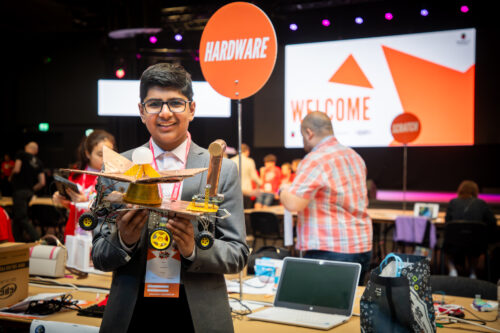
Coolest Projects is our global technology showcase for young people aged up to 18. Coolest Projects gives young creators the incredible opportunity to share the cool stuff they’ve made using digital technology with a global audience. Everyone who takes part will also receive certificates and rewards to celebrate their achievements.
What you need to know about Coolest Projects
The Coolest Projects online showcase is open to young people worldwide. Young creators can enter their projects to share them with the world in our online project gallery and join our extra special livestream event to celebrate what they have made with the global Coolest Projects community.
By taking part in Coolest Projects, young people can join an international community of young makers, represent their country, receive feedback on their projects, and get certificates to recognise their achievements.
Coolest Projects is completely free to take part in, and we welcome all digital technology projects, from young people’s very first projects to advanced builds. The projects also don’t have to be completed before they can be submitted.
Projects can be submitted to one of seven categories: Scratch, games, web, mobile apps, hardware, advanced programming, and AI (new for 2025).
Young creators up to age 18 can take part individually or in teams of up to five friends
Any young person anywhere in the world can take part in the online showcase, and there are in-person events in some countries for local creators, too (find out more below)
Submissions for the online showcase are now open and close on 28 May 2025
All creators, mentors, volunteers, teachers, parents, and supporters are invited to the special celebration livestream on 25 June 2025
We know Coolest Projects has a big impact on young people all over the world, and we can’t wait to see your creations for 2025. You can find out more about the incredible creativity and collaboration from mentors and makers worldwide in our 2024 impact report.
How to submit your project
Taking part in Coolest Projects is simple:
Young people think of an idea for their project or choose something they’ve already made and are proud of
Young people work with friends to create their project or make it on their own
Creators (with the help of mentors if needed) enter projects via the Coolest Projects website by 28 May
Creators’ projects are shared with the world in the online showcase gallery
Creators, mentors, and supporters explore the amazing projects in the online gallery and join the livestream on 25 June to celebrate young creators’ achievements with the Coolest Projects community worldwide
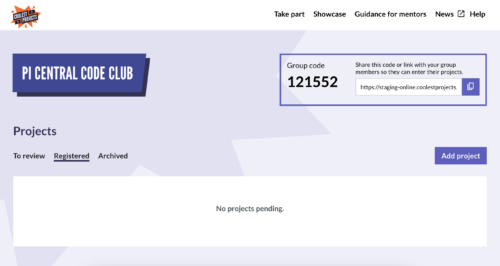
Mentors — entering more than one project? Sign up for a group code, and your young people can link their projects to your account.
Sign up or log in. If you don’t have one already, you’ll need to set up a Raspberry Pi account. Click on the ‘sign up’ link in the top right-hand corner of the website to create one, and provide your details. You’ll be emailed a verification code as part of the sign-up process. If you already have an account, you can just log in.
Create a group. Once signed in, you’ll be able to create a group. You’ll be asked questions about your group, including the group name and the country you’re based in, and be asked to agree to some privacy policies before continuing. You will then be able to view your group code and group submissions on your group dashboard.
Share your group code with your young people. Your group dashboard should look like this, with your group code displayed. The group code is what your young people will need to link their submissions to your account. They’ll be asked to input their group code at the start of the project submission form.
Submit your coolest projects. Every young person who uses your group code will have their project linked to your account. You can review and edit their projects in your group dashboard and submit them from there. There is no limit to the number of young people who can submit entries using your group code.
For a more detailed run-through of how to use group codes, please see our ‘how-to’ video.
As well as the global online showcase, Coolest Projects in-person events are held for young people locally in certain countries. We encourage creators to take part in both the online showcase and their local in-person event. In 2025, creators can attend the following in-person events, run by the Raspberry Pi Foundation and partner organisations around the world:
Coolest Projects Ireland, 1 March 2025 (run by the Foundation) — entry closes on Friday 14 February
Coolest Projects South Africa, 2025 date coming soon (run by CoderLevelUp)
More events are on the way, so sign up for the Coolest Projects newsletter to be sure you hear about any in-person events in your country. And if there isn’t an event near you, don’t worry, as the online showcase is open to any young person anywhere in the world.
Need help with your submission?
Coolest Projects welcomes all digital tech projects, from beginner to advanced, and there are loads of great resources available to help you help the young people in your community to take part. If you’re searching for inspiration, take a look at the 2024 showcase gallery, where you can explore the incredible projects submitted by participants last year.
You’ll find everything you need to know about all seven Coolest Projects categories on our category pages, including our brand new AI category. Our projects site is also a great place for participants to begin — there are hundreds of free step-by-step project guides to help young people create their own projects, whether they’re experienced tech creators or just getting started.
We will also be running a series of online webinars for mentors and young people to help participants develop their creations for each Coolest Projects category. Sign up for the sessions here. All sessions will be recorded, so you can watch them back if you can’t join live.
Be sure to check out the Coolest Projects guidance page for resources to help you support young people throughout their Coolest Projects journey, including a mentor guide and session plans.
There’s lots more exciting news to come, from the announcement of our VIP judges to details about this year’s swag, so sign up for updates to be the first to know.
Whether your coders have already made something that they want to share, or they’re inspired to make something new, Coolest Projects is the place for them. We can’t wait to see what they create!
It’s that time of the year again. The annual AWS re:Invent conference is just around the corner. Still need to save your spot? You can register here.
This year’s DevOps and Developer Productivity (DOP) track features an impressive lineup, including 11 breakout sessions, 14 chalk talks, 2 code talks, 8 workshops, 3 builder sessions, and 2 lightning talks.
I have curated a list of the DOP sessions that you should pay attention. I also invite you to visit the re:Invent catalog to explore the full range of DOP offerings. There is a collection of GenAI related sessions, leveraging Amazon Q Developer and Amazon Bedrock, as well as the usual AWS DevOps tools that we all love, Infrastructure as Code (IaC), Continuous Integration and Continuous Deployment (CI/CD).
How to reserve a seat in the sessions
Reserved seating is available for registered attendees to secure seats in the sessions of their choice. Reserve a seat by signing in to the attendee portal and navigating to “Event”, then “Sessions”.
Do not miss the Innovation Talk led by VP of Developer Experience, Adam Seligman. In DOP220 – Reimagining the Developer Experience at AWS – Software development is undergoing a seismic shift driven by generative AI, transforming how developers work, what they build, and who can become a developer. AWS empowers developers to fearlessly embrace this evolution, integrating cutting-edge yet responsible generative AI solutions across the development lifecycle. Explore real-world use cases accelerating legacy modernization, elevating cloud-native innovation, and unlocking remarkable results. Gain insights into AWS’s pragmatic approach, fueling creativity and customer impact. Join the vibrant community on this transformative journey, where generative AI is redefining software development, opening new frontiers for innovation, and democratizing access to coding for diverse creators shaping technology’s future.
DevOps and Developer Productivity breakout sessions
What are breakout sessions?
AWS re:Invent breakout sessions are lecture-style and 60 minutes long. These sessions are delivered by AWS experts and typically reserve 10–15 minutes for Q&A at the end. Breakout sessions are recorded and made available on-demand after the event.
DOP201 – AWS infrastructure as code: A year in review – AWS provides services that enable the creation, deployment and maintenance of application infrastructure in a programmatic, descriptive, and declarative way. These services provide rigor, clarity, and reliability to application development. Join this session to learn about the new features and improvements for AWS infrastructure as code with AWS CloudFormation and AWS Cloud Development Kit (AWS CDK) and discover how they can benefit your team.
DOP202 – Continuous integration and continuous delivery (CI/CD) for AWS – AWS provides one place where you can plan work, collaborate on code, and build, test, and deploy applications with continuous integration and continuous delivery (CI/CD) tools. In this session, learn about creating complete CI/CD pipelines using infrastructure as code on AWS.
DOP204 – Amazon Q Developer: Your gen AI assistant for software development – In this session, learn how Amazon Q Developer is transforming the developer experience by speeding up a range of tasks that support you as you research how to get started, evaluate system design, build secure and scalable applications, upgrade existing applications, and optimize application performance. Learn firsthand how Amazon Q capabilities for building, troubleshooting, and transforming applications faster and more easily frees you up to focus on experimentation and innovation.
DOP209 – Accelerate application maintenance and upgrades with generative AI – Developers spend significant time completing the undifferentiated work of maintaining and upgrading legacy applications. Teams need to balance investments in building new features with mandatory patching and update work. Now, using the power of generative AI, the Amazon Q Developer agent for code transformation can expedite these critical upgrade tasks, transforming applications to use the latest language features and versions in hours or days and saving significant costs. Join the session to learn what’s new and how your team can automate Java application upgrades.
DOP214 – Unleashing generative AI: Amazon’s journey with Amazon Q Developer – Join us to discover how Amazon rolled out Amazon Q Developer to thousands of developers, trained them in prompt engineering, and measured its transformative impact on productivity. In this session, learn best practices for effectively adopting generative AI in your organization. Gain insights into training strategies, productivity metrics, and real-world use cases to empower your developers to harness the full potential of this game-changing technology. Don’t miss this opportunity to stay ahead of the curve and drive innovation within your team.
DevOps and Developer Productivity chalk talks
What are chalk talks?
Chalk Talks are highly interactive sessions with a small audience. Experts lead you through problems and solutions on a digital whiteboard as the discussion unfolds. Each begins with a short lecture (10–15 minutes) delivered by an AWS expert, followed by a 45- or 50-minute Q&A session with the audience.
DOP318 – Prompt engineering expertise: Unleashing code with Amazon Q Developer – Dive into the art of prompt engineering and discover how to harness the full potential of Amazon Q Developer, AWS’s cutting-edge generative AI service. Learn techniques to craft compelling prompts that yield remarkable code generation results. Explore strategies to provide contextual information beyond prompts, such as import statements, to enhance the accuracy and relevance of your AI-generated code. Elevate your software development workflow and unleash the transformative capabilities of generative AI.
DOP324 – Incorporating generative AI in the CI/CD pipeline – In this chalk talk, discover how generative AI can revolutionize your continuous integration and delivery (CI/CD) pipeline. Learn how AI models can analyze code changes and generate recommendations for safe deployments. Explore automated orchestration capabilities that trigger deployments, monitor metrics, and adapt strategies. Gain insights into using AI for continual monitoring and self-improving release cycles, streamlining your software delivery while minimizing risks and manual efforts.
DOP314 – Automate Java app upgrades & accelerate innovation with generative AI – Amazon Q Developer’s agent for code transformation automates the end-to-end process of upgrading and transforming code. Reduce the time and costs associated with modernizing applications, unlock previously cost-prohibitive and cumbersome modernization opportunities, and save customers months or even years of effort. By automating undifferentiated upgrade and modernization tasks, customers can enhance application performance and security and accelerate innovation. Join this chalk talk to learn how to take your application modernization to the next level.
DOP323 – From Windows to Linux: .NET application modernization – Porting and upgrades of .NET applications running on Windows servers to Linux can deliver cost savings and enhance security and compliance, but the modernization process can be long and laborious. This interactive chalk talk explores strategies for porting server-side components of a .NET application within days by refactoring. The session includes codebase analysis, code decomposition into buildable units, transformation plan creation, and execution of key transformation tasks with approval from the developer.
DevOps and Developer Productivity workshops
What are workshops?
Workshops are two-hour interactive learning sessions where you work in small group teams to solve problems using AWS services. Each workshop starts with a short lecture (10–15 minutes) by the main speaker, and the rest of the time is spent working as a group.
DOP304 – Develop AWS CDK resources to deploy your applications on AWS – In this workshop, learn how to build and deploy applications using infrastructure as code with AWS Cloud Development Kit (AWS CDK). Create resources using AWS CDK, and learn maintenance and operations tips. In addition, get an introduction to building your own constructs. You must bring your laptop to participate.
DOP305 – Modern CI/CD with GitHub and AWS CodePipeline – In this workshop, learn how to build modern continuous integration and continuous delivery (CI/CD) pipelines using GitHub and AWS CodePipeline through the AWS Management Console. Learn how to work with monorepos and branching strategies. Explore advanced features such as automatic rollbacks, pipeline parameters, stage level conditions, and concurrent execution modes to improve your pipeline performance. You must bring your laptop to participate.
DOP309 – The Amazon Q Developer coding challenge – Join this workshop to participate in 20 increasingly complex coding challenges aided by Amazon Q Developer, an AI-powered assistant for software development. Discover how Amazon Q Developer’s auto-generated code recommendations and chat explanations can help you develop code and understand complex algorithmic coding challenges more efficiently compared to manual coding alone. Learn about Amazon Q Developer capabilities and how it can help you improve productivity. You must bring your laptop to participate.
DOP325 – Boost code quality with generative AI – In this hands-on workshop, you unleash the power of generative AI to boost code quality using Amazon Q Developer. You learn to use Amazon Q Developer to generate unit tests and documentation automatically, addressing the challenge of balancing new feature development with writing unit tests and documentation. By the end of the workshop, you have firsthand experience streamlining your development process and freeing up time to focus on core feature development. Come follow along with step-by-step instructions and gain practical experience with this cutting-edge AWS service. You must bring your laptop to participate.
DevOps and Developer Productivity builders’ sessions
What are builders’ sessions?
These 60-minute group sessions are led by an AWS expert and provide an interactive learning experience for building on AWS. Builders’ sessions are designed to create a hands-on experience where questions are encouraged.
DOP205 – Learning new skills with Amazon Q Developer – Experience the power of Amazon Q Developer, your AI-powered assistant for software development. In this session, explore how Amazon Q Developer can streamline your daily workflow on AWS. Stuck in the console? Open the Amazon Q Developer panel for instant assistance. Can’t find your way through the documentation? Amazon Q Developer guides you effortlessly. Need help crafting CLI commands? Amazon Q Developer has you covered. Want assistance right in Slack or Microsoft Teams? Amazon Q Developer is by your side, helping you work smarter, faster, and more efficiently across your favorite tools. You must bring your laptop to participate.
DOP302 – Creating secure code with Amazon Q Developer – In this builders’ session, gain hands-on experience using Amazon Q Developer to create secure code. Write unit tests, optimize code, and scan for vulnerabilities, and discover how Amazon Q Developer suggests remediations that help fix your code instantaneously. Also, learn how you can use Amazon Q Developer security scanning to outperform other publicly benchmarkable tools on detection across popular programming languages. You must bring your laptop to participate.
DOP401 – Modernizing Java applications with Amazon Q Developer – In this builders’ session, use Amazon Q Developer Agent for code transformation to modernize a Java application. Learn how Amazon Q Developer can leverage generative AI to automate common language upgrade tasks like updating your code, conducting unit tests, and verifying deployment readiness starting with Java. Save days’ or even months’ worth of the undifferentiated work involved in moving from older language versions. You must bring your laptop to participate.
DevOps and Developer Productivity lightning talks
What are lightning talks?
Lightning talks are short, 20-minute demos led from a stage.
DOP217 – Best practices for customizing Amazon Q Developer – With Amazon Q Developer, you can securely connect to your private repositories to generate even more relevant code recommendations based on your internal code repositories, ask questions about your company code, and understand your internal code bases faster. In this session, learn how to set up customizations and generate code based on your internal repos. Use the Amazon Q Developer chat in your IDE to ask questions about how your internal code base is structured, where and how certain functions or libraries are used, and how to use specific functions, methods, or APIs.
DOP219 – How NAB uses Amazon Q Developer for increased productivity – Significantly accelerate development by customizing Amazon Q Developer to generate even more relevant inline code recommendations and chat responses (in preview) by making it aware of your internal libraries, APIs, best practices, and architectural patterns. In this lightning talk, you learn how National Australia Bank (NAB) is using Amazon Q Developer to help their development teams ship faster, and innovate more for their customers, by using customizations.
DevOps and Developer Productivity code talks
What are code talks?
Code talks are 60-minute, highly-interactive discussions featuring live coding. Attendees are encouraged to dig in and ask questions about the speaker’s approach.
DOP313 – Get tailored code insights with Amazon Q Developer and private repos – Unlock the full potential of Amazon Q Developer with customized code recommendations tailored to your organization’s code base. In this code talk, learn how to securely connect Amazon Q to your private repositories, enabling it to generate highly relevant code suggestions based on your internal coding practices. Discover how to create and utilize customizations, and witness firsthand the transformative impact on code comprehension and development efficiency by comparing suggestions with and without customization. Elevate your coding experience with this powerful feature.
DOP315 – Optimize your cloud environments in the AWS console with generative AI – Available in the AWS Management Console, Amazon Q Developer is the only AI assistant that is an expert on AWS, helping developers and IT pros optimize their AWS cloud environments. Proactively diagnose and resolve errors and networking issues, provide guidance on architectural best practices, analyze billing information and trends, and use natural language in chat to manage resources in your AWS account. Learn how Amazon Q Developer accelerates task completion with tailored recommendations based on your specific AWS workloads, shifting from a reactive review to proactive notifications and remediation.
Want to stay connected?
Get the latest updates for DevOps and Developer Productivity by following us on Twitter and visiting the AWS devops blog.
If you are unable to join us in-person, Breakout Sessions will be available via our YouTube channel after the event. Contact your AWS Account Team is you are interested in learning more about any of these sessions or how to bring our experts to you.
From December 2nd to December 6th, AWS will hold its annual premier learning event: re:Invent. At this event, attendees can become stronger and more proficient in any area of AWS technology through a variety of experiences: large keynotes given by AWS leaders, smaller innovation talks and interactive working sessions given by AWS experts, and fun activities such as live music and games at re:Play.
There are over 2000+ learning sessions that focus on specific topics at various skill levels, and the compute team have created 72 unique sessions for you to choose. There are many sessions you can choose from, and we are here to help you choose the sessions that best fits your needs. Even if you are not able to join in person, you can catch-up with many of the sessions on-demand and even watch the keynote and innovation sessions live.
The Basic: Session types
If you’re able to join us, just a reminder that we offer several types of sessions which can help maximize your learning in a variety of AWS topics.
re:Invent attendees can also choose to attend chalk-talks, builder sessions, workshops, or code talk sessions. Each of these are live non-recorded interactive sessions.
Breakout sessions: Attendees will be in a lecture-style 60-minute informative sessions presented by AWS experts, customers, or partners. These sessions are recorded and uploaded a few days after to the AWS Events YouTube channel.
Chalk-talk sessions: Attendees will interact with presenters, asking questions and using a whiteboard in session.
Builder Sessions: Attendees participate in a one-hour session and build something.
Workshops sessions: Attendees join a two-hour interactive session where they work in a small team to solve a real problem using AWS services.
Code talk sessions: Attendees participate in engaging code-focused sessions where an expert leads a live coding session.
Lightning talk sessions: Attendees watch a 20-minute demo dedicated to either a specific service or customer story (located in the Expo Hall).
Getting started with Amazon EC2
The foundation of compute in AWS is Amazon Elastic Compute Cloud (Amazon EC2). Amazon EC2 offers the broadest and deepest compute platform, with over 800 instances and choice of the latest processor, storage, networking, operating system, and purchase model to help you best match the needs of your workload. We’ve created the following sessions to help you implement and manage your workloads in Amazon EC2.
CMP101 | What’s new with Amazon EC2 Learn about the latest compute innovations from AWS. This session helps you better understand Amazon EC2 instances and how organizations like yours can use them to run any workload while meeting your cost, performance, and sustainability goals.
CMP343 | Select and launch the right instance for your workload and budget With more than 800 instances for various use cases, including instances best for common workloads and for workloads with specific requirements, how do you choose instances? Learn how to determine which instance is best for your specific use case and budget.
CMP319 | Managing Amazon EC2 capacity and availability Amazon EC2 offers a variety of capacity usage and reservation models, so you can choose the right combination for your workload and budget. Learn how to combine these models in a way that’s best for your business and manage your capacity to improve utilization and availability.
CMP207 | AWS-accelerated computing enables customer success with generative AI Discover how AWS provides the most performant, low-cost infrastructure for building and scaling large-scale generative AI models. Come learn what’s new in the accelerated computing portfolio including our GPU-based and AWS AI chips-powered instances.
CMP318 | Choose the optimal compute environment for your AI/ML workloads If you’re trying to decide between accelerators such as AWS Inferentia and AWS Trainium, GPUs from NVIDIA and AMD, processors such as AWS Graviton, or managed services such as Amazon Bedrock and Amazon SageMaker, this chalk covers the different options available on AWS.
Learn about AWS compute innovations
AWS has invested years designing custom silicon optimized for the cloud to deliver the best price performance for a wide range of applications and workloads using AWS services. Learn more about the AWS Nitro System, processors at AWS, and ML chips.
The AWS Nitro System is a rich collection of building block technologies that are powering the recent and future generations of Amazon EC2 instances. Dive deep into the Nitro System and see how it made the seemingly impossible possible.
CMP320 | AWS Graviton: The best price performance for your AWS workloads AWS Graviton-based Amazon EC2 instances provide the best price performance for workloads in Amazon EC2. Learn about common use cases, best practices to optimize your workloads across various applications, customer success stories, and how to accelerate your Graviton journey.
Generative AI promises to revolutionize industries, but its immense computational demands and escalating costs pose significant challenges. To overcome these hurdles, AWS designed and purpose-built AI chips including AWS Trainium2 and AWS Inferentia2.
CMP334 | Deep dive into third generation AWS Nitro SSDs Learn about AWS Nitro SSDs. Discover how AWS Nitro SSDs are different than other commercially available SSDs and see how AWS Nitro SSDs can deliver performance to benefit your workloads.
Optimize your compute costs
At AWS, we focus on delivering the best possible cost structure for our customers. Frugality is one of our founding leadership principles. Cost effective design continues to shape everything we do, from how we develop products to how we run our operations. Come learn of new ways to optimize your compute costs through AWS services, tools, and optimization strategies in the following sessions:
CMP214 | Win-win: Maximize Amazon EC2 savings while improving performance Let this session be your guide to building cost-effective, sustainable infrastructure without sacrificing application performance on AWS. Learn both technical and non-technical best practices for building efficient compute architectures on AWS.
CMP408 | Amazon EC2 flex instances: Deliver performance at lower cost Amazon EC2 flex instances provide the easiest way to save costs and achieve better price performance for a majority of your workloads. In this session, dive deep into flex instances, explore how they deliver performance at lower cost, and identify the suitable workloads.
CMP312 | Spot the savings: Optimize deployments with Amazon EC2 Spot Instances Amazon EC2 Spot Instances use spare Amazon EC2 capacity available to you at steep discounts compared to on-demand prices. In this workshop, learn about the solutions, tools, and best practices to help you maximize your savings with Spot instances.
CMP346 | Uncover compute efficiency with AWS Graviton Savings Dashboard The Graviton Savings Dashboard offers a comprehensive analysis of your compute usage, identifying prime candidates for Graviton migration. Learn how to implement and use the Graviton Savings Dashboard to quantify the potential TCO reduction from Graviton adoption.
CMP311 | Proactively scale for optimal cost and availability in Amazon EC2 Amazon EC2 Auto Scaling groups help you take advantage of the elasticity benefits that are built in to AWS. With more responsive and proactive scaling, you run only the required number of instances at any time of the day, reducing the cost of overprovisioned EC2 instancess
Maximize you workload’s performance
Your workload’s performance matters beyond just cost because it directly impacts the quality, efficiency, and effectiveness of your compute solution. It can significantly influence customer satisfaction, business growth, and overall productivity. Even if a cheaper option exists, a low-cost option with poor performance can lead to long-term financial losses due to issues such as lost customers, engineering rework, and negative reputation. We have a number of sessions that help you optimize your workload’s performance.
CMP411 | Everything you’ve wanted to know about performance on EC2 instances This session covers all the details you’ve always wanted to know to optimize your compute performance such as memory topology, accessing hardware counters, accounting for the side-effects of hyperthreading, properly running performance tests, and optimizing your latency.
CMP413 | Moving from naive benchmarking to application performance engineering Most of the time, benchmarks aren’t representative of their applications’ behaviors. In this session, learn the tools and best practices that will help you understand your applications’ performance behaviors on Amazon EC2 instances so that you can maximize your performance.
CMP405 | How to optimize latency and throughput The availability of processors with and without hyperthreading makes performance evaluation a tricky game. In this code talk, study a web application and evaluate its performance in various scenarios, and discover how to optimize throughput and latency along the way.
Customer experiences and applications with machine learning
Machine learning (ML) has been evolving for decades and has an inflection point with generative AI applications capturing widespread attention and imagination. More customers, across a diverse set of industries, choose AWS compared to any other major cloud provider to build, train, and deploy their ML applications. Learn about generative AI infrastructure at Amazon or get hands-on experience building ML applications through our ML focused sessions, such as the following:
CMP208 | Customer stories: Optimizing AI performance and cost with AWS AI chips AWS Trainium and AWS Inferentia deliver high-performance AI training and inference while reducing costs by up to 50%. Attend this session to hear from four AWS customers and how they realized these benefits to grow their businesses while delivering innovative experiences.
CMP321 | Explore the many ways to train foundation models on AWS This session unravels the complexities of building and scaling large scale foundation models. From selecting the optimal compute resources to optimizing data pipelines and maximizing network performance.
CMP331 | Build and accelerate LLMs on AWS Trainium and AWS Inferentia using Ray Learn how to accelerate the development and deployment of large language models (LLMs) with Ray, AWS Trainium, and AWS Inferentia. This session delves into how Ray’s unified compute framework integrates with powerful AWS AI chips to optimize performance and cost efficiency.
CMP304 | Fine-tune Hugging Face LLMs using Amazon SageMaker and AWS Trainium You can improve the performance of a pretrained LLM by fine-tuning the model using a smaller task-specific or domain-specific dataset. In this builders’ session, learn how to use Amazon SageMaker to fine-tune a pretrained Hugging Face LLM using AWS Trainium for inference use.
CMP314 | Keeping it small: Agentic workflows with SLMs on AWS Inferentia While LLMs offer versatility, smaller language models (SLMs) provide resource efficiency, speed, and simplicity. This session explores task simplification and decomposition techniques to harness multiple specialized SLMs, surpassing a single large model’s accuracy at fraction of cost.
CMP329 | Beyond text: Unlock multi-modal AI with AWS AI chips Revolutionize your applications with multi-modal AI. Learn how to harness the power of AWS AI chips to create intelligent systems that understand and process text, images, and video.
CMP323 | Optimize your AI/ML workloads with Amazon EC2 Graviton Join this session to explore performance, cost, and sustainability optimizations of your AI/ML solutions with services powered by AWS Graviton, accelerated computing instances, and Amazon EC2 Spot Instances.
The AWS Graviton Processors are custom designed server processors designed by AWS. They deliver the best price performance for your cloud workloads running in AWS, and help you reduce your carbon footprint. Ready to realize up to 40% better price performance for your workloads? We have curated the following session to help you accelerate your Graviton adoption:
CMP305 | Learnings from developers adopting AWS Graviton at scale In this chalk talk, engage directly with AWS specialists that help customers on a daily basis with their adoption journey—from workload selection to running at scale in production. Explore AWS Graviton use cases, best practices, performance, and customer success stories.
CMP310 | Migrating applications to AWS Graviton on Amazon EKS During this hands-on workshop, walk through the steps for migrating a workload running on x86 to AWS Graviton-based instances including performing tests locally and modifying the CI/CD pipeline to build and deploy the application in Amazon EKS using Karpenter.
CMP316 | AWS Graviton GameDay: Optimize your Amazon EC2 workload with Graviton Ready to learn more about AWS Graviton in an immersive environment? In this team-based gamified learning setting, perform a live migration of your workload to Graviton. You learn how to unlock Graviton’s full price-performance potential and optimize the size of an Amazon EC2 fleet.
CMP404 | Exploring performance analysis with AWS Graviton instances In this session, AWS experts open a shell on an Amazon EC2 instance and dig into the system to see which tools and resources you can use, including the Amazon Aperf tool. Learn as they write some mini-applications to study their performance behavior and how to improve them.
Check out workload-specific sessions
Amazon EC2 offers the broadest and deepest compute platform to help you best match the needs of your workload. More SAP, high performance computing (HPC), ML, and Windows workloads run on AWS than any other cloud. Join sessions focused around your specific workload to learn about how you can leverage AWS solutions to accelerate your innovations.
CMP205 | Launch a secure WordPress site on Amazon Lightsail in minutes Join this session to learn how to set up a secure and highly available WordPress website on Amazon Lightsail – an easy-to-use virtual private server (VPS). Discover what Amazon Lightsail is, the resources available to create a website, and how to set one up in minutes, all at a predictable monthly cost.
CMP341 | Migrate and modernize your web applications with AWS Elastic Beanstalk Moving classic web applications to the cloud can be a complex task for customers. In this chalk talk, operators and developers can learn the benefits of using AWS Elastic Beanstalk to upload and deploy web applications in a simplified, fast way and integrate with your existing CI/CD.
CMP213 – Run workloads efficiently on EKS with Karpenter and EC2 Spot Instances This session covers how Karpenter can help you reduce complexities and improve efficiency in Kubernetes clusters. Explore how to leverage Amazon EC2 Spot Instances as a purchase option, and learn how AWS Graviton-based Amazon EC2 instances help further optimize your workloads while improving sustainability.
CMP322 | Amazon EC2 High Memory portfolio for SAP HANA This session showcases how customers leverage the agility, flexibility and resiliency that AWS High Memory instances provide to help them deploy and scale the infrastructure for SAP HANA deployments while meeting performance and high availability goals.
CMP324 | Protect sensitive data in use with AWS Confidential compute Confidential computing enables customers to protect code and data from unauthorized access during processing. This session dives into how AWS delivers a combination of hardware- and software-based solutions to deliver confidential computing capabilities.
CMP203 | Drive innovation and results with high performance computing on AWS In this session, explore how customers across healthcare and life sciences (HCLS) and manufacturing industries are harnessing the convergence of HPC, cloud, and AI on AWS to accelerate time to insights, optimize performance, and drive innovation.
CMP210 | Modernize Apple platform development with AWS and EC2 Mac Learn about Apple application development in the cloud using EC2 Mac instances and hear firsthand how an AWS customer optimized its Apple development workflow and benefited from Apple application development in the cloud.
CMP302 | Run containerized workloads efficiently on AWS Containers offer scalability and flexibility, enabling seamless deployment, management, and scaling of applications in any environment. Using containers on AWS can help you improve your efficiency and achieve your price performance goals.
CMP326 | Accelerate AI innovation for health care and life sciences on AWS Biopharma researchers are looking to build and deploy models such as AlphaFold2, ProtGPT2, and ESM-2 for generative biology and chemistry. In this chalk talk we cover how to deploy NVIDIA BioNeMo on NVIDIA GPU-powered Amazon EC2 instances, AWS ParallelCluster, and Amazon SageMaker.
CMP342 | Scaling 3D content creation with open source technologies This chalk talk explores 3D Gaussian Splatting as an emergent 3D reconstruction technique and how AWS can accelerate and scale the generation, management, and consumption of digitalized real-world assets in enterprise contexts, from virtual production to immersive commerce.
The AWS Compute team looks forward to seeing you in Las Vegas. Come meet us at the Compute Booth in the Expo and check out our various Amazon EC2 demos. And if you’re looking for more session recommendations, check-out additional re:Invent attendee guides curated by experts.
The collective thoughts of the interwebz
Manage Consent
To provide the best experiences, we use technologies like cookies to store and/or access device information. Consenting to these technologies will allow us to process data such as browsing behavior or unique IDs on this site. Not consenting or withdrawing consent, may adversely affect certain features and functions.
Functional
Always active
The technical storage or access is strictly necessary for the legitimate purpose of enabling the use of a specific service explicitly requested by the subscriber or user, or for the sole purpose of carrying out the transmission of a communication over an electronic communications network.
Preferences
The technical storage or access is necessary for the legitimate purpose of storing preferences that are not requested by the subscriber or user.
Statistics
The technical storage or access that is used exclusively for statistical purposes.The technical storage or access that is used exclusively for anonymous statistical purposes. Without a subpoena, voluntary compliance on the part of your Internet Service Provider, or additional records from a third party, information stored or retrieved for this purpose alone cannot usually be used to identify you.
Marketing
The technical storage or access is required to create user profiles to send advertising, or to track the user on a website or across several websites for similar marketing purposes.


 Willem Visser, VP of EC2 Technology will open with the introduction of the AWS journey since 2006, when
  Todd Kennedy, Principal Engineer, GoDaddy, will share GoDaddy’s Graviton adoption journey and the benefits it reaped from Graviton. Todd will walk through an example to demonstrate moving Rust workloads to Graviton. Learn how GoDaddy achieved 40 percent compute cost savings and over 20 percent performance gains.